
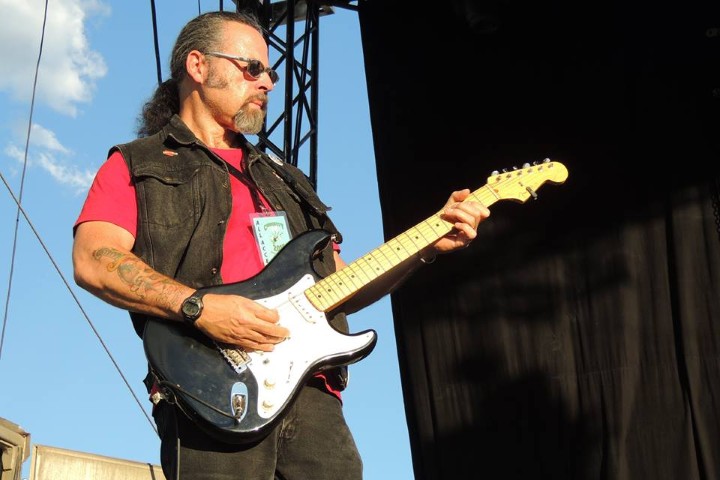
Canadian Blues Master Wailin’ Al Walker Hits #1 With New Album, Bluesman
Vancouver bluesman Al “Wailin’” Walker has spent nearly five decades proving that the blues is not a genre you retire from. His eighth self-produced album, Bluesman, has landed at #1 on the Roots Music Report Canada chart, the latest chart-topper in a catalogue that stretches back to 1978, and a career built almost entirely on his own terms.
Walker wrote, produced, engineered and mixed ‘Bluesman’ himself, a role he has filled on every one of his eight albums, from his 1978 debut, Rock It Day and Night, with his band the Houserockers, through ‘The Devil Made Me Play It’, ‘Buzzsaw Boogie’, ‘Crazy at Night’, ‘No Regrets’, ‘All Fired Up’ and ‘Blues Lightnin’’. The last three releases have each reached number one on the Roots Music Report charts in Canada, and ‘Bluesman’ has now added a number six placement on the US Roots Music Chart, with airplay on 57 stations worldwide.
The album’s lead single, “Too Many Bills,” has already reached number one on the Roots Music Report Top 50 chart in both the US and internationally, and drew praise from Blues Blast Magazine. Recorded with longtime collaborators Bruce O’Neill on bass, Marko Ibarra on drums, Darryl Havers on keyboards and Jerry Cook on saxophone, the track pairs a driving, high-energy groove with the raw grit Walker has built his reputation on.
Walker leads the Wailin’ Walker Band out of Vancouver with bassist Bruce O’Neill, drummer Marko Ibarra, saxophonist Jerry Cook and keyboardist Dave Webb, all fixtures of the city’s West Coast blues, jazz and roots scene. It is a lineup with deep roots of its own: Ibarra spent more than twenty years as Jerry Doucette’s drummer, Cook earned a 2026 CBMA nomination for Best Sax Player on Walker’s ‘All Fired Up’, and O’Neill has held down the Vancouver blues scene’s low end since 1982.
Across Bluesman’s ten tracks, Walker moves between original songs and tributes to the artists who shaped him. “It Takes Time” is a cover of his mentor Otis Rush, recorded, Walker says, to honour “his iconic Chicago blues blueprint” and let “his signature guitar work and emotional depth breathe.” “Directly From My Heart” reworks Little Richard, and “Blues Hour” brings in Hollywood Fats Band alumni Richard Innes and Larry Taylor.
Two tracks carry weight. “Drink Muddy Water,” a cover of Eddie Miller, features the final recorded guitar performance of the late Jerry Doucette, with whom Walker played for twelve years. “Never Getting Old,” the album’s closing track, was co-written with the late Evan Johns, a friend and collaborator whose songwriting partnership with Walker stretched back years before his passing.
Walker’s history in the blues runs deeper than his own catalogue. He has been personally mentored by Buddy Guy, Pee Wee Crayton and Otis Rush, and has shared stages with Johnny Winter, George Thorogood and Stevie Ray Vaughan. Buddy Guy has said simply, “He plays the stuff like it’s supposed to be played,” while Otis Rush praised his diction: “His elocution is incredible! I can hear every word he sings from the back of the club!” Walker was also a member of the Jerry Doucette Band from 2006 to 2018, served as the house band at Vancouver’s Commodore Ballroom for 78 shows, and has written songs recorded by Long John Baldry and Powder Blues.
Hi, Al! Good to meet you! Care to introduce yourself to the readers for those not familiar with your music?
Hey there! Thanks for doing this. My name is Wailin’ Al Walker. I’m an electric blues rock guitarist, singer, and songwriter based out of Vancouver, British Columbia. I’ve spent most of my life playing stages, laying down guitar and singing blues and rock music for nearly six decades now. My sound is deeply rooted in traditional Chicago, Delta, and jump blues styles—raw, honest, turn-it-up music made with real instruments, real room tone, and a whole lot of soul. I try to keep my music authentic, gritty and straight from the heart.
You’ve been making records for nearly 50 years, and now Bluesman is another No. 1 album. When you look back at the young musician who released Rock It Day and Night in 1978, what do you think he’d make of where this journey has taken you?
When I look back I have to smile and shake my head because I’m thrilled to still be standing here doing this at this high level. Back when “Rock It Day and Night” came out, all I cared about was plugging in, turning the amplifier up, and getting the feeling across. To see Bluesman hit No. 1 all these years later proves that if you stay true to the craft and never compromise on the feeling, the music stays timeless. That young guy back in ’78 had the fire, but it takes a lifetime of living to bring the experience full circle.
You wrote, produced, engineered, and mixed this album yourself, just as you’ve done throughout your career. In an era when so much music is made by committee, why has it always been so important for you to keep your hands on every part of the process?
For me, blues isn’t just a style of music—it’s a direct personal statement. When you write, engineer, and mix it yourself, nothing gets lost in the translation. Every microphone choice, every guitar tone, and every subtlety in the mix carries the emotion I felt when the song was created. Today, a lot of records get polished until all the character is scraped off, but I want the listener to hear the room, the wood of the guitar, and the sweat in the performance. Holding the reins from start to finish lets me keep the sound raw and completely real. No disappointments!
This record includes the final recorded guitar performance from Jerry Doucette and songs that honour mentors and friends you’ve lost along the way. As you were making Bluesman, did it ever feel like you were recording a conversation with the people who helped shape you?
Oh yes, all the time! Having Jerry’s final performance on this record is very special to me, and as I was tracking and mixing these songs, the presence of old friends and mentors was right there in the room. Musicians like Buddy Guy, John Lee Hooker, Otis Rush, and Pee Wee Crayton didn’t just teach me how to play — they showed me how to live and breathe this music. Making Bluesman felt like pulling up a chair with all of them, sharing stories, paying my respects, and letting them know their lessons weren’t forgotten.
Buddy Guy once said, “He plays the stuff like it’s supposed to be played.” That’s about as high a compliment as a blues musician can receive. After all these years, what do you think it really means to play the blues ‘the way it’s supposed to be played’?
We’ve all learned so much from Buddy and a quote like that means so much to me. Playing the blues ‘the way it’s supposed to be played’ isn’t about how fast your fingers can fly across the fret board or how technical you can get. It’s about economy, phrasing, and the swing. It means leaving space for the notes to breathe, bending a string so it speaks like a human voice, and playing with commitment. You don’t play the blues to showcase your technique; you play it to tell a story and make the listener feel something. Buddy taught me when you hit a single note and it moves somebody, that’s when you know you’re playing it right.