
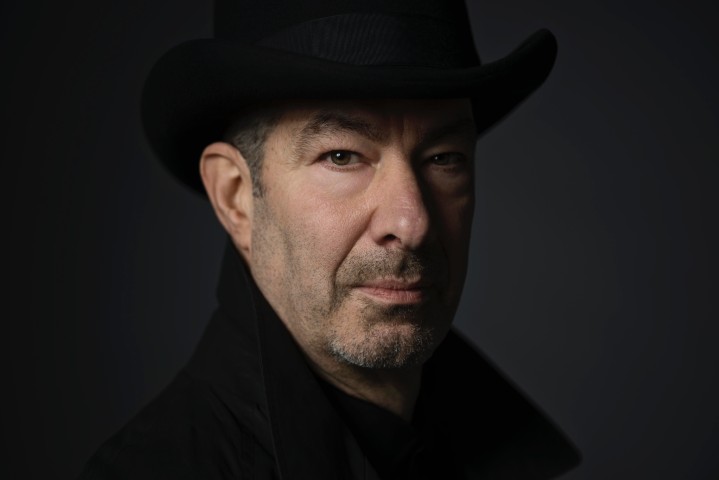
Danny Marks Returns With ‘Back to the Blues,’ a Landmark Album From One of Canada’s Most Beloved Blues Masters
Danny Marks, one of Canada’s most enduring and deeply revered figures in blues and roots music, releases his new album Back to the Blues on all major platforms. Spanning 13 tracks and drawing on more than five decades of living, listening, and playing, the record is both a homecoming and a declaration: a master musician at the height of his craft, returning to the music that has always told the truest story. In Marks’ own words, “The inspiration for ‘Back to the Blues’ is both a homecoming and a way forward, set to music. This is for you. My heart is on the line.”
Back to the Blues is an album that breathes with the full weight of a life spent honouring the form. From the jubilant, stomping invitation of “Blues Party Tonight” to the aching reverence of “Blues for Lonnie Johnson,” Marks moves through the tradition with the ease and authority of someone who didn’t just study it but lived inside it. The title track sets the tone with the kind of plainspoken poetry the blues does best: “I’ve travelled around this dusty old town / I’ve worn out deep holes in my shoes / I’ve been here and there, just about everywhere / But something keeps calling me back to the blues.” It is a sentiment that could only come from an artist whose relationship with the music runs bone-deep, and whose voice carries it with complete conviction.
The album’s emotional core is unmistakable. “Please Mister Conductor,” one of the record’s most quietly devastating songs, finds Marks drawing on deeply personal experience to craft a blues narrative of perseverance and grace: “I’ll gladly pay my ticket, when we reach the other side.” Elsewhere, “Beltline Blues” conjures the Toronto of Marks’ youth with cinematic clarity, tracing the railway tracks and the mother’s tears and the front door left behind at seventeen. And “Uncle John” pays tender tribute to the blues lineage itself, honouring the legacy of John Hurt with a song that is equal parts elegy and celebration. Throughout Back to the Blues, Marks holds to the truth he has carried since his first notes as a musician: “Blues is truth and truth rings out authentically for each of us in our own way.”
Produced by Alec Fraser Jr. and Marks himself, ‘Back to the Blues’ is a record made by musicians who know one another completely. Fraser serves double duty on bass and background vocals, anchoring the record with warmth and authority, while the drum chair rotates among four of Toronto’s most seasoned players: Al Cross, Bucky Berger, Chuck Keeping, and Barry Keane. The keyboards of Jonathan Goldsmith and the piano of Julian Fauth add colour and depth across the record, while harmonica masters David Rotundo and Chris Whiteley bring heat and texture to key tracks. Robert Piltch contributes second guitar, saxophonists Wayne Mills and Gene Hardy add brass firepower, and the vocal harmonies of Sherrie Marshall and Wendy Irvine round out a record whose ensemble feel is the sound of a community gathered around something they all believe in. The album was recorded across multiple storied Toronto studios and remastered by L Stu Young at Loud Mouse.
For those newly arriving at the name Danny Marks, the biography demands a moment. Co-founder of Edward Bear, the celebrated Canadian band whose hits filled radio across the country in the early 1970s, Marks went on to work as a sideman alongside Rick James, Bo Diddley, and Ronnie Hawkins, and shared stages with Paul Butterfield, Led Zeppelin, and Humble Pie. He brought the blues to generations of Toronto listeners as host of BLUZ FM on JAZZ FM91 and through his television series Cities in Blue on HIFI TV. In 2006, he received the Blues with a Feeling Lifetime Achievement Award, a recognition that speaks not only to the breadth of his contribution but to the singular depth of his commitment. With ‘Back to the Blues,’ that commitment finds its fullest and most personal expression to date.
What makes Back to the Blues remarkable is not simply that it is a fine blues record, though it unquestionably is. It is that it arrives as the statement of an artist who has earned every note. “Blues of the Future” pushes the music forward with a clear-eyed look at the human condition, while “Land Where Blues Began” anchors the album in a sense of place and origin that only a true student of the form can conjure. “Blues Came to Chicago” honours the electric transformation that changed music forever, name-checking the giants who made it happen. Taken together, these 13 songs do what the greatest blues albums have always done: they make you feel less alone in the world and remind you that the music was built for exactly that purpose.
“Since my first beginnings as a musician until today, good things have happened when I honoured the music, the people, and the stories of our lives,” Marks reflects. “Creating art from adversity is a universal act.”
Hi, Danny! Good to see you again! Care to introduce yourself to the readers for those not familiar with your music?
Music and Broadcast are my twin peaks. My interests converge there. I see a way to bring people together. Music is a healer and we can all use that. I’ve been enamored with guitar since an early age. Guitar is a friend and a tool to connect with myself and others, whether quietly at home or in front of a crowd. There’s no other instrument like it. Singing is also good for the soul and songwriting is perhaps the ultimate culmination. As for the Broadcast part, being on the radio is a blast. Radio is theatre of the mind, bringing a warm connection to other hearts, one on one.
You describe ‘Back to the Blues’ as both “a homecoming and a way forward.” After more than five decades in music, what did returning to the blues allow you to say now that you could not have said earlier in your career?
Back to the Blues blends styles that influenced me. Growing up in Toronto we heard all kinds of music, including all kinds of Blues. Now’s the time to release a mix that’s uniquely personal. Much as it’s natural for folks to compare us to other artists, I never sat with the record to learn, so I did stuff wrong! Maybe that’s the essence of style. Most of us mature with time and learn to slow down to let the stories breathe.
You have worked with legends from Bo Diddley to Ronnie Hawkins and shared stages with Led Zeppelin and Paul Butterfield. Looking back, what lesson from those experiences still shapes the way you approach music today?
I learned it’s possible to be both proud and humble at the same time. That’s what Bo Diddley embodied. Opening for Paul Butterfield, the audience response to Everyday I Have the Blues was overwhelming. I got so light-headed, I almost fainted. Led Zeppelin was interesting. The audience was star-studded and our band faced the challenge of doing Toronto proud. I’d been a fan of the Jeff Beck Group, and felt that Zeppelin was taking their cue from them. I was young, unfazed at how monumental the whole thing was. We also opened for the Byrds, Badfinger and Humble Pie, three bands whose music I adored. They all blended styles instead of sticking to a pure musical genre. That’s natural for our generation.
You spent years introducing audiences to blues music through radio and television. Did hosting BLUZ FM and Cities in Blue change the way you listened to or understood the genre yourself?
Hosting the radio and TV informs me about the great names who came before, and what’s happening today. As a radio programmer, I can usually tell quickly if a song or selection resonates and also that repeated listens can let good things grow. All art is about stories and music is stories in song. The accompaniment should support the plot. The sum of the parts makes or breaks any piece.
After a lifetime in music, awards, broadcasting, touring, and recording, what does success mean to Danny Marks in 2026 compared to what it meant when you first started out?
In the early years, I was a young upstart, confident and cocky. These days, I have a lot to learn and I know it.
Having memories of the past and hopes for the future makes for a better today. Corny as it may sound, every day is a blessing. Thank you as always Canadian Beats and now, Back to the Blues.