
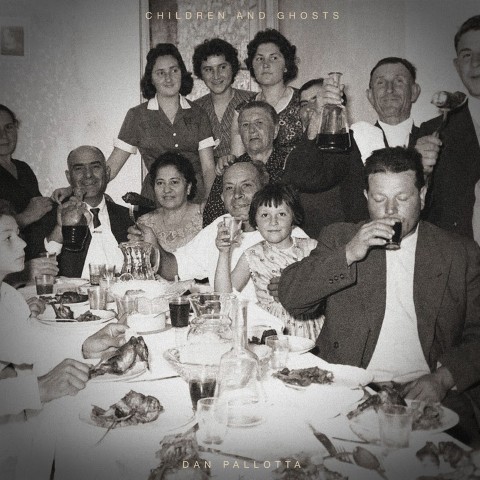
Dan Pallotta Finds Stories in the Spaces We Leave Behind on Intimate Folk Album, Children and Ghosts, Led by “Abandoned Mansion”
Singer-songwriter Dan Pallotta shares Children and Ghosts, an intimate new folk/Americana album that offers a contemplative reprieve from the noise and chaos of everyday life. Across nine songs and just 25 minutes, Pallotta meditates on coming and going, existence and absence, memory and impermanence, creating what he describes as “one cozy lullaby made of nine ideas.”
Recorded entirely on an iPhone in his bedroom over two days, Children and Ghosts is deliberately simple in both sound and presentation. Pallotta sat in the same chair, with the same guitar and the same mood, capturing the songs with as little distance as possible between the moment of performance and the listener. All of the songs were played on a 1930s mahogany Martin 2-17 parlor guitar, and the album was purposely mixed in mono to enhance the simplicity, with the reverb mixed in stereo to give it a touch of modernity.
“I’d wanted to make something like this for several years – a simple little record with a simple sound, inspired by old Hank Williams recordings,” Pallotta says. “I made this to be listened to in a quiet space. It’s best on headphones, and most affecting when listened to start to finish.”
At the heart of the record is “Abandoned Mansion,” a quiet meditation on the lives that once occupied the spaces we now pass without a second thought. Beginning with the familiar experience of driving past an old house and wondering who once lived there, the song imagines a forgotten estate that was once alive with wealth, parties, ambition, laughter, love, and dreams before gradually falling silent.
That sense of transience runs throughout Children and Ghosts. With two exceptions, its songs were written over several months last year, but they share a singular atmosphere, contemplating the traces people leave behind and the strange space between presence and absence. Rather than approaching those ideas with grand arrangements, Pallotta strips them down to their essentials: a voice, an acoustic guitar, a room, and the questions that remain when everything else grows quiet.
“Abandoned Mansion” brings those questions into particularly sharp focus. Who once filled those forgotten rooms with laughter? Who fell in love there? Who imagined a future from inside those walls? By constructing a life around a place now defined by its emptiness, Pallotta turns the abandoned home into a reflection on mortality and memory.
“It’s a reminder that, in the end, every life leaves behind stories,” he says. “The question is whether someone will still be listening.”