
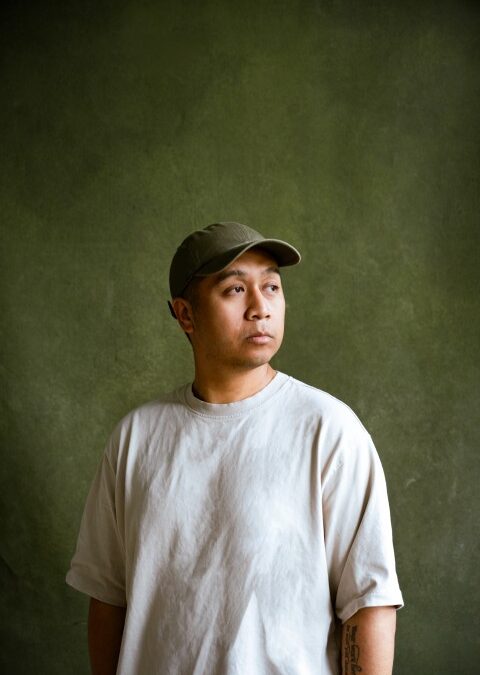
Vancouver hip-hop artist Francis Arevalo blends soulful production, personal storytelling, and heartfelt lyricism on his latest album, Home, Grown.
East Vancouver-born-and-based emcee Francis Arevalo brings together his Filipino heritage, lifelong love of hip-hop, and passion for storytelling on his latest album, Home, Grown. Known for his thoughtful lyricism and energetic performances, Arevalo creates music that balances emotional honesty with uplifting messages.
Having developed his craft in Vancouver’s poetry slam scene as a teenager, Arevalo has built a distinctive sound rooted in spoken word, soulful hip-hop, and personal experiences. His music combines digital production with live instrumentation, creating colourful, layered arrangements that complement his deliberate delivery and clever wordplay.
His latest project, Home, Grown, continues that evolution with warm, sample-driven beats, vocal chops, lush harmonies, and impactful drums. The album showcases Arevalo’s ability to weave meaningful stories into melodic, textured production while staying true to the influences that shaped him.
Beyond music, Arevalo is a passionate mental health advocate who openly shares his experiences living with bipolar I disorder and generalized anxiety disorder. His journey of expressing himself through music was also explored in the award-winning documentary The Lion.
Through his artistry and advocacy, Francis Arevalo continues to demonstrate the power of music to connect, encourage, and create meaningful conversations.
Listen to Francis Arevalo’s Home, Grown
Francis Arevalo Interview – Exploring Home, Grown and Personal Storytelling
We caught up with Francis Arevalo to discuss his latest album, Home, Grown, his journey from poetry slams to hip-hop, the influence of his Filipino heritage, and the importance of storytelling and mental health advocacy in his music.
First off, care to introduce yourself to our readers?
I’m Francis Arevalo, a Filipino-Canadian emcee, spoken word poet, and producer born and based in East Vancouver. I make music to find the meaning in the mundane, inspire and empower others, and to offer hope and light during dark times in life.
Home, Grown feels like a very intentional title, especially for an artist whose work is rooted in identity, place, and personal experience. What does the title mean to you, and what does “home” represent within this album?
I intentionally titled the album “Home, Grown” with a comma in between because I wanted it to communicate the idea that I have both arrived at a new sense of home and the statement that I am now grown up because of it. This album is an exploration into becoming the person and artist I’ve always strived to be over these last 9 years of making this project and having a career in music. In this album, “Home” is expressed in a few ways:
– feeling grounded and secure in who I am as a person, both on my own and across the different relationships in my life
– the actual place of East Vancouver, where I was born and am still based
– embracing the different roles in my family and feeling ready to follow through on all of them
– a sense of belonging and connection to the communities I’ve grown up within and alongside
– musically, this album is full of songs that are the best representation of me to date, the kinds of beats I feel home in as a lyricist
– feeling comfortable in my own skin and experience as a 2nd generation Filipino
– feeling safe in my mind as someone who has learned, and continues to learn, to live with Bipolar Type 1 and Generalized Anxiety Disorders
You grew up in East Vancouver and your Filipino heritage is an important part of who you are. How have those two influences shaped your perspective as a songwriter and the stories you choose to tell through hip-hop?
I grew up in a Filipino, Tagalog-speaking household with 16 people. The first community I was ever a part of was the family I shared a roof with. I learned the practice of collective living at an early age, which became the foundation from which the rest of my community building and collaborative efforts later in life grew. Values of the importance of family, the shared self, a fighting spirit, and communal unity were taught to me throughout life, so that informed how I showed up in the world and participated in all relationships and groups, Filipino or not. I understand the way I interact with the world and my community to be characteristically Filipino. Personally and creatively, my core influences are Filipinos who inspire me and offer mentorship, guidance, and insights through our everyday conversations.
Before developing your career as an emcee, you were involved in Vancouver’s poetry slam scene as a teenager. How did spoken word shape your approach to rhythm, lyricism, and the way you deliver a story through music?
I’ve loved rap since I was a child, but to be honest, my writing and performance career started in spoken word and poetry slams because I didn’t have the greatest lyrical rhythm in the early days. I loved rhymes but I had raw and dense lyrical ideas that I couldn’t yet fit in the structure of a beat or bar. Spoken word offered me a form and space to explore and refine my writing styles and techniques. I would come to compete at a high level for a few years and find my voice along the way through the competitions. In those poetry slams, I was often creating within the restrictions of 3 minute performances, so I had to be clear about the narrative I was telling, and wanted to have clear openings, closings, and memorable takeaways for the audience. That same approach has stuck with me in my songwriting.
Home, Grown has a warm, layered sound built around samples, vocal chops, harmonies, and impactful drums. What kind of sonic world did you want to create with this record, and how did you find the right balance between the production and your lyrics?
I wanted to draw from the sounds, feelings, and genres that I like listening to as a fan and artist, as this is in an album about, from, and by me. I wanted this album to sound the most “me” in 2026 as possible. So, the soundscapes it explores are pretty expansive, but at the end of the day, this is a hip-hop record, so the drums and rhythms need to be sound and memorable throughout. My favourite rap records are the kinds where you can imagine the environment or city the rappers are rapping from, so I wanted to imagine a musical world that sounded like the Vancouver and West Coast that I knew, which was lush, alive, colourful, and vibrant. That’s the main reason why there is so much live instrumentation on this record, brought by the talents of some local legends I get to call friends. At the end of the day, as much as I love music and production, I will always be a lyrics person first and foremost, so no matter how lush the music got, we were centering musical and mix choices that served the vocals.
As a mental health advocate, what role do you think music and storytelling can play in helping people feel less alone, particularly when conversations surrounding mental health can still be difficult to have?
What comes to mind is the time back in 2015 when I had come home from a 1-month stay in the psychiatric ward, after a 4-month period of mania and psychosis. I remember feeling so disoriented, confused, overwhelmed and alone during that time. One of the first things I did was search “Filipino bipolar disorder” and was disappointed that hardly anyone was speaking to that experience. Once I got back on my feet and started speaking about my journey living with Bipolar Type 1, I committed to becoming the person I needed back then, in case someone else in the community was searching for a reference point for hope the way I was. Conversations around mental illness, trauma, and mental health generally, are often challenging and sensitive to have, if they’re even acknowledged at all. I think the power of music and art generally is that it can soften the experience of hearing the hard thing I have to say and be a gateway into longer conversations and deeper understanding together. Over the years, I’ve been brought in to speak at gatherings of various sizes, from small discussion groups at Early Psychosis Intervention as an alum, to keynotes at conferences. Ultimately, I hope my music can be of service to people who are looking for those messages of hope, survival and life beyond recovery, and that I can offer something helpful to these conversations.
Your performances have taken you from intimate living rooms to festival stages. How does your approach change depending on the space, and what do you hope someone feels or takes away after seeing Francis Arevalo perform live?
The core approach to performing live remains the same regardless of the size of audience or venue. I consider what lives at the intersection of what i feel the most excited and called to perform right now, what’s the collective energy in the space, what is my performance setup (solo/with DJ/with band), what songs are the most relevant to the present moment, and messages would be important to share right now. The core difference might be the size of the sound depending on the size of the venue and audience, but that’s really it. I feel comfortable performing “big” songs in small cafés, and I feel comfortable performing intimate songs or even acappellas on festival stages. My hope is that an audience member leaves my set lighter, inspired, and empowered to carry that energy into the rest of their lives.
If you could collaborate with any Canadian artist, past or present, who would you choose?
To be completely honest, this album has all the collaborations I have dreamed of. I’ll always stay open to collaborations that could happen but I’m not in place to make any new music at the moment. We’ll see what collaborations could flow next!
What’s one thing—big or small—that always makes you feel at home?
Love!
Looking at Home, Grown as part of the larger body of work you’re building, what does this album represent for you at this point in your journey, and what’s next for Francis Arevalo?
Home, Grown is the third act in telling the story of growing into the person and artist I’ve always wanted to be. It completes a trilogy which started with Heatcheck, telling the story of being a young rapper just wanting to demonstrate I could put fire bars over fire beats, and then followed by The Sound of Healing which told the story between 2015-2017 of my mental health crisis and the aftermath after, with Home, Grown telling the story of life beyond recovery. These days, I’m equally excited to invite people into the Home, Grown world as I am to live the next chapter of my life now that I have more space in my mind, heart, and days to focus on other areas. There will be different events and activations around the album in the coming months as well as different ideas and events to bring to my community here in Vancouver.
Connect with Francis Arevalo:
Website | Bandcamp | Facebook | Instagram