
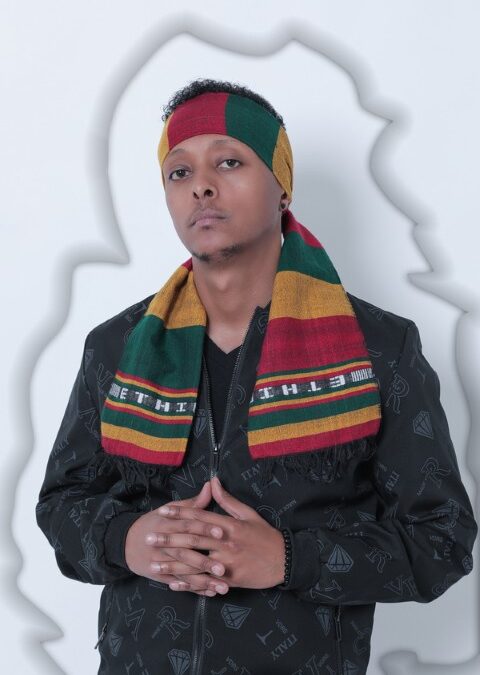
Ethiopian Canadian Artist Rawmny Wildcat Releases Bold New Single “Manew,” Lead Track From Forthcoming Album ‘Habeshinated’
Toronto-based artist Rawmny Wildcat, (pronounced Raw Money Wildcat) releases his commanding new single “Manew” on June 26, 2026, the lead track from his highly anticipated album, Habeshinated, arriving the same day. Born in Addis Ababa and now rooted in Toronto, the producer, songwriter and vocalist has crafted a song that fuses hip hop, soul and East African sound into a powerful declaration of who he is and where he comes from.
The title says it all. “Manew” means “who is it” in Amharic, and Rawmny turns that simple question into a thesis on identity, lineage and earning your place. “People askin manew, it’s Rawmny manew,” he raps at the open, before drawing a direct line to the artists who came before him. “Actin like it cost you an arm and a leg to pay respect, where it’s due for the forefathers who be opening up the avenue.” It is a track built on pride and momentum, with Rawmny describing himself as bringing “that addis fire to a frozen zone.”
That image of carrying warmth from Ethiopia into a Canadian winter sits at the heart of Rawmny’s artistry. His story begins beside his father’s hi-fi speakers in Addis Ababa, where as a small child he was swept away by Motown, soul and the records his father brought home from his travels as the head of aviation maintenance with Ethiopian Airlines. Music became a private fascination, then a calling, one he pursued through talent shows and late-night radio broadcasts after his family moved to Montreal in the winter of 1997, arriving just ahead of the historic ice storm that shut down the region.
Rawmny built his foundation hands on, hanging around CKUT McGill Radio until DJs Mike Mission and Ken Dawg let him freestyle on air, then earning his way into a producer’s basement studio where he completed his first independent project. Today he runs his own Toronto label and media company, Wildvision Media, where he oversees production and marketing, the same self-made spirit that powers “Manew” and its message of hustle, authenticity and respect for the culture.
Habeshinated arrives as the product of a personal homecoming. After eighteen years away, Rawmny returned to Addis Ababa and performed two sold out shows, jammed with the band of Ethiopian jazz pioneer Mulatu Astatke at the African Jazz Village, and shared the stage with fellow Ethiopian hip hop pioneer MC Siyamregn at Club Platinum. He also linked with celebrated local producer Hunante Mulu, soaking up a city transformed by new growth. That trip became the emotional engine of the album, a body of work about belonging to two places at once and bridging them through sound.
The diaspora experience runs through every corner of the record. “In Canada, people see me as Ethiopian. In Ethiopia, many people saw me as Canadian,” Rawmny reflects, a duality he transforms into creative fuel rather than tension. ‘Habeshinated’ celebrates that doubled identity across its tracklist, from the swaggering hometown pride of “Habesha in the 6ix” to the restless searching of “Traveller,” each song carrying a piece of the journey from Addis to Montreal to Toronto and back.
Drawing comparisons to artists ranging from the Fugees and Wyclef Jean to Kendrick Lamar, Wizkid and Ethiopian star Rophnan, Rawmny Wildcat has spent years building an independent catalogue marked by emotional honesty and an energetic stage presence. With “Manew,” he sharpens that vision to a fine point, delivering a confident introduction to an album he describes as a full circle return to the wonder he first felt as a boy beside those speakers in Addis Ababa.
Hi, Rawmny! Good to see you again! Care to introduce yourself to the readers for those not familiar with your music?
First off, thank you for having me back! My name is Rawmny Wildcat. I’m an Ethiopian-Canadian artist, DJ, producer, and storyteller. My music is a blend of Afrobeat, Dancehall, Hip-Hop, and Ethiopian influences, but more than anything, it’s about identity, culture, and bringing people together.
Growing up between two worlds gave me a unique perspective. I was surrounded by Ethiopian traditions at home while growing up in Canada, where I was exposed to so many different cultures and sounds. Instead of choosing one lane, I embraced all of it.
Whether I’m making music, DJing, or creating content, my goal is always the same: to celebrate where we come from while showing that our different backgrounds can coexist beautifully. I want people to dance, but I also want them to leave with a deeper appreciation for culture, history, and community.
The first words on Manew are essentially, ‘Who is it? It’s Rawmny.’ When did you stop feeling like you had to introduce yourself and start feeling like you truly knew who you were as an artist?
I think that happened when I stopped trying to fit into what I thought the industry wanted and started creating music that genuinely reflected me. Early on, I felt pressure to sound a certain way or chase trends, but over time I realized that my biggest strength was the fact that nobody else has lived my exact experience.
Being Ethiopian and Canadian isn’t something I have to explain anymore—it’s simply who I am. Once I embraced that, my music became more honest. “Manew” isn’t just introducing my name; it’s introducing the fully realized version of myself. It’s me saying, “This is who I am, and I’m proud of every part of my story.”
That confidence didn’t happen overnight. It came from years of growth, learning, and understanding that authenticity lasts longer than trends.
You write about paying respect to the forefathers who opened the avenue. Who are the people—musically or personally—that you feel you owe the biggest debt to, and how do you carry that respect into your own work?
First and foremost, I owe everything to my parents. They sacrificed so much to give me opportunities they never had, and they made sure I stayed connected to my Ethiopian roots while building a life in Canada. Sharing my gift in Music is also my way of paying homage to our ancestors who paved the way and paid the price for us to be here.
Musically, I have deep respect for the Ethiopian legends who preserved our culture through music, as well as the artists who pushed African music onto the global stage. They’ve shown that our stories deserve to be heard worldwide.
I also have a lot of respect for the pioneers of Hip-Hop, Dancehall, and Afrobeats. They created spaces where people from different backgrounds could express themselves unapologetically, and that’s something I carry with me every time I create.
For me, paying respect isn’t just about mentioning names—it’s about continuing the work. It’s about representing my culture with integrity, opening doors for the next generation, and making sure that someone growing up like I did can see themselves reflected in the music.
You spent years being seen as Ethiopian in Canada and Canadian in Ethiopia. Was there a specific moment when you realized you didn’t have to choose one identity over the other?
It wasn’t one single moment—it was more like a gradual realization.
Growing up in Canada, I was “the Ethiopian kid.” When I’d visit Ethiopia, people would remind me that I was Canadian. For a long time, it felt like I was always standing in between.
Eventually I realized that being in between wasn’t a weakness—it was actually my superpower. I don’t have to choose one identity because both have shaped who I am. Canada taught me to embrace diversity and creativity, while Ethiopia gave me my roots, my history, and my sense of identity.
Once I stopped looking at those identities as competing with each other and started seeing them as complementary, everything changed. That’s really what Habeshinated is about. It’s the sound of someone who’s finally comfortable being 100% Ethiopian and 100% Canadian at the same time.
If someone listens to Manew and then hears the rest of Habeshinated from beginning to end, what’s the one conversation or feeling you hope stays with them long after the music stops?
I hope people walk away feeling proud of who they are.
Whether you’re Ethiopian, Jamaican, Nigerian, Canadian, or from anywhere else, I want the album to remind people that your heritage isn’t something you have to hide or choose between. Your story is valuable because it’s yours.
I also hope it sparks conversations about culture, history, and identity. We live in a world where people are becoming more connected than ever, but sometimes we forget to appreciate the roots that make us unique. If Habeshinated encourages someone to ask their parents about their history, learn more about their culture, or simply embrace every part of themselves with confidence, then I’ve done what I set out to do.
At the end of the day, I want people to leave feeling inspired, empowered, and united. Different backgrounds don’t have to divide us—they can become something beautiful when we celebrate them together.