
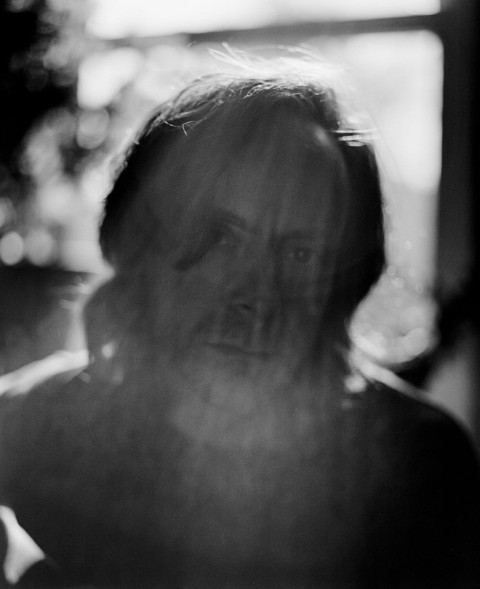
Montreal’s DANIEL ISAIAH offers a roots rock remedy with new LP, Western Medicine
After previewing his new album Western Medicine with the brilliant singles “Too Far To Run” and “How The Tiger Got Her Stripes,” Montreal-based singer/songwriter Daniel Isaiah today releases the full 10-song collection — a tour de force of roots music song craft, conjuring images of Leonard Cohen fronting The Band, and Randy Newman recording in Neil Young’s barn.
The sound of Western Medicine is also in large part a reflection of the confidence Daniel has built since making his previous album To Live A Wild Life, the result of improving his sight-reading skills and immersing himself in old songbooks.
He says,
“Songwriting started as a hobby, something I did when I needed songs for a band or a record. Now it’s part of my daily life. I can’t really imagine living without it.”
Working in a practice room on the top floor of a building with a panoramic view of Montreal, Daniel honed the songs on Western Medicine, some of them right up to the album’s recording sessions in May 2025 at Montreal’s Mixart Studios with a band comprised of drummer Robbie Kuster, bassist Mishka Stein, pianist Jérome Beaulieu and guitarist Warren Spicer, who also oversaw engineering and mixing.
“I had almost no preconceived ideas of how the songs should take shape in the studio,” he admits. “Before the session, I made rough demos of all the songs—just me on guitar or piano—and sent them to the musicians. We had one rehearsal where we played through each song once or twice. That was the extent of preparation.”
Still, it’s the lyrics that form the core of Western Medicine. “Fire In The Night” pays tribute to a friend who struggled with mental illness and tragically lost his life in a cabin fire north of Montreal, while “Champion Is Down” grew out of images of Mussolini and Gaddafi being done in by their own citizens. Elsewhere, Daniel was inspired to write “Old Ram’s Horn” after inheriting his grandfather’s shofar, an essential symbol of Jewish culture, while “Total Eclipse Of The Sun” was written in the immediate aftermath of the April 2024 solar event.
Western Medicine indeed opens our eyes and ears to fleeting moments of beauty. And once attuned to that, there can be no argument that this is one of the best albums of the year.
First off, care to introduce yourself to our readers?
My name is Daniel Isaiah Schachter, I’m a songwriter from Montreal, and I’ve just released my fifth solo album Western Medicine.
Western Medicine feels both deeply personal and observational—what thread connects these songs for you, even if it wasn’t intentional at the start?
My wife keeps a lot of plants around the house. She waters them regularly. Some of them need a lot of water — others not so much. It’s the same with my songs. Each has different needs, but they all grow out of the same soil.
You’ve described songwriting as becoming part of your daily life—how has that shift changed the way you approach a song compared to earlier in your career?
Well, I’ve accumulated a lot of tools over the years. In the early days all I had was a hammer and some nails. Now I’ve got an oscillating multi-tool, a Shop Vac, and kneepads. Did I just compare songwriting to raising plants? It’s more like re-grouting the bathroom tiles.
How did working with musicians like Robbie Kuster, Mishka Stein, Jérome Beaulieu, and Warren Spicer shape the final sound of the album?
We didn’t talk much. Or we did, but not about music. Before the session, we sat in a circle and ran through the songs. When we did “How The Tiger Got Her Stripes”, Mishka suggested landing on the relative minor to announce the chorus — Em instead of repeating the G chord. That made a difference. Shaping the album was an accumulation of small things like that. One of the pleasures of making this album was seeing how good a time everyone was having. I felt like Clarissa Dalloway hosting a party.
Compared to To Live A Wild Life, where do you feel you’ve grown the most as an artist on Western Medicine?
I’m not sure I’ve grown as an artist — which is fine. I’m getting better at piano and guitar though. I’ve been learning a bit of theory, and now I can substitute chords, and transpose songs to different keys and find new harmonies there.
Has this album changed how you think about what comes next creatively?
No. I’m not a planner when it comes to making music. I just follow the ideas wherever they lead. Some of them take me to places I would never have planned to go. Recording Western Medicine reminded me how much I like the sound of a band playing together in a room. I don’t want to record too many overdubs going forward, though sometimes you don’t have a choice — renting a studio and hiring musicians is expensive. But as long as I can do that, I will. So, yeah, more of the same, please.