
Teagan Johnston Searches for Home Beyond Success & Leans Into Alt-Country on Sophomore Album, Big Time, Led by Introspective Title Track
Toronto-based multidisciplinary artist Teagan Johnston unveils her sophomore album, Big Time (out this Friday October 2nd), a candid exploration of ambition, identity, family, heartbreak and the often absurd pursuit of success. Written and recorded over two years between Taurus Recording in Toronto and Sonic Ranch in Texas, the record pushes further into alt-country territory while retaining Teagan’s distinctive collision of singer-songwriter folk, emo and indie/alternative rock. Previously released singles have been met with critical acclaim from CBC’s Q, Exclaim! and Sirius XM.
Big Time emerged during a period when Teagan deliberately stepped back from her music career and began reflecting on a decade spent struggling to “hit the big time.” Rather than arriving at a simple answer, the album questions what that idea actually means, moving between darker experiences of familial trauma and heartbreak, and moments of brevity, humour and recognition of life’s inherent absurdity.
Those reflections are deeply intertwined with Teagan’s understanding of home. After severing ties with several family members while confronting childhood trauma, she began reconsidering the places, relationships and ambitions she had previously looked toward for a sense of belonging.
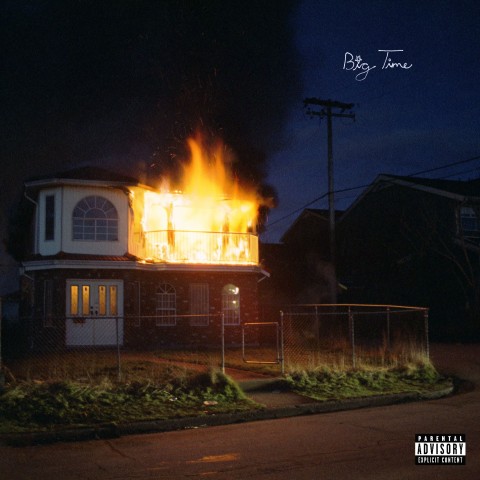
The title track was the first song Teagan wrote for the record, arriving before she was even certain the music would become something she wanted to release. Its lyric, “We got on like a house on fire,” unexpectedly connected the song to an image sent to her that same night by photographer Christopher Jerome: his photograph “House Fire.”
The image depicts a burning “Vancouver Special” surrounded by an otherwise dark, quiet neighbourhood. Having spent much of her childhood in Victoria, BC, Teagan immediately connected its familiar architecture to her own childhood home and experiences. The contrast between a seemingly ordinary suburban setting and the urgency of a house engulfed in flames mirrored the disconnect between how a family can appear from the outside and what may be unfolding within it. The photograph ultimately became the album cover.
That imagery carries into the “Big Time” music video, co-directed by Teagan and filmmaker Ryan Glover, whose previous collaborations include the Canadian horror film The Strings. Returning to the DIY approach that has long defined their work together, the pair used a projector, Hi8 camera, and Ryan’s family home in Burlington, ON, filming until four in the morning to create a dreamlike exploration of home, identity and memory.
“I wanted to incorporate the album and song’s imagery of a burning home but present it in a way that could feel joyful, explorative and almost childlike,” Teagan explains. “I think when I was writing Big Time, the question of home and identity were really at the forefront of my mind.”
For Teagan, that search for home also became inseparable from her ideas about success. Having grown up moving frequently, she spent much of her twenties consciously or subconsciously looking for belonging in other people and in her career, hoping something “big” might fill the space left behind. Ultimately, both the song and album turn that pursuit inward, questioning whether the “Big Time” is something external to reach at all.
First off, what have you been up to since we last spoke?
I am trying to remember when the last time we spoke was – I am thinking maybe my last record release, which was spring 2022! Since then I have been mainly working on this record and started my own music teaching business! 🙂
Big Time grew out of a period when you stepped back from your music career and began questioning what it actually means to “make it.” How has your definition of success changed since you first started pursuing music?
My definition of success these days is mainly just feeling emotionally fulfilled. I think success has changed from a future idea for me and changed into just enjoying the now – when I look around at all the time I get to spend with music these days that feels like success to me.
The album explores ambition alongside some deeply personal subjects, including family, heartbreak, and childhood trauma. What was it like turning those experiences into songs while still finding room for humour and moments of lightness?
Wonderfully cathartic!
Christopher Jerome’s photograph “House Fire” became the album cover after immediately connecting with your own memories of childhood and home. What did you see in that image that made you realize it belonged with this record?
First off I think it’s just an unbelievably striking image – to see a house on fire like that is quite something. I really love that the house on fire is kind of like bursting through in almost what feels like an other worldly way, no one is around to see it or help it but it is burning down and inevitably changing into something new from all the other houses around it. It also strikes me how quiet and dark the other houses are in comparison – it’s like almost no one even knows that this house is burning down, except us the viewer.
The “Big Time” video takes the imagery of a burning home and approaches it in a dreamlike, almost playful way. Why was it important to balance something potentially dark with that sense of curiosity and childlike exploration?
I think it’s almost important to me in art to try to find play and curiosity in even dark emotions – I think with Big Time especially I wanted the house burning down to feel like a triumph and a wonderful newness as opposed to a darkness.
You recorded the album between Taurus Recording in Toronto and Sonic Ranch in Texas. How did working in those two very different environments influence the sound and atmosphere of Big Time?
I have been so fortunate to have two homes as lovely as Sonic Ranch and Taurus to work on this record. Both brought different important energies for sure and are two wonderful spaces. Taurus gave me a lot of freedom to work slowly and ground myself, picking and chipping away slowly at stuff close to home and Sonic gave me a chance to really immerse myself in a space that felt like how I wanted the record to sound. Sonic was mainly all the big room live stuff like piano and drums and vocals as well as a bit of writing took place there, whereas Taurus was really about building ideas and then editing and defining. Again, I feel really lucky to have just even accessed either of those spaces.
After spending so much of your twenties searching for belonging through relationships, places, and your career, what do you hope listeners take away from Big Time and its questioning of whether the “big time” is really something outside ourselves at all?
I hope mainly that listeners can hear and understand my journey and hopefully feel less alone in their own journeys. <3