
Yukon-based alt-country artist emerges as a powerful new voice from northern Canada
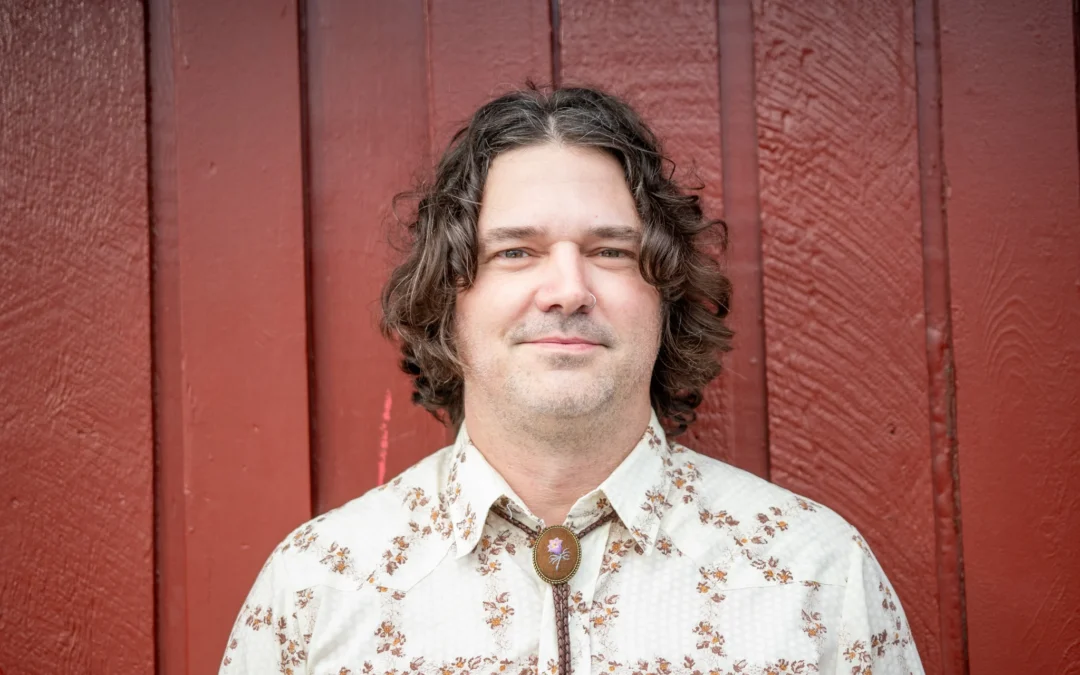
There’s a certain kind of honesty that comes through in Caleb Tomlinson’s music — the kind you can’t fake. Based in Whitehorse, the Yukon singer-songwriter creates songs that feel raw, reflective, and deeply connected to both place and experience.
With his EP Solstice, Tomlinson delivers a collection of songs that explore relationships, memory, and the quiet moments that tend to linger the longest. It’s the kind of record that reveals more with every listen.
We had the chance to chat with Caleb about the stories behind Solstice, working with fellow Whitehorse musicians, and what’s next as his audience continues to grow.
First off, care to introduce yourself to our readers?
Sure! I am a singer-songwriter living in Whitehorse, Yukon. I struggle with genre definitions, but I am inspired by lyric-focused songwriters like Leonard Cohen, Townes Van Zandt, and John K Samson. Musically, I love old country and Americana and modern takes on old country. I spend a lot of time outside in the mountains and on the rivers in the Yukon, and I’ve had a whole other career in wildfire suppression and management. I get a lot of inspiration from being outside and, also from the nature of the landscapes and seasons and ecological processes out here – the destruction and renewal and new trajectories created from a forest fire, for example. I’ve been spending most of my time playing music over the last three years, with a focus on live shows throughout western Canada. I just did my first UK and Ireland tour and I’m looking forward to touring there again and also getting out to the rest of Canada.
Solstice has such an intimate, almost timeless feel—how intentional was that simplicity when you were writing and recording these songs?
For the writing, my intent was to keep things spare and direct. It’s simple melodies and fairly straightforward song structure. Lyrically, the idea is always to tell a story that’s compelling and complete. Timelessness definitely wasn’t a direct goal but I do have an aversion to putting anything into too narrow a band of time. It’s not something I put effort into though, I think it’s just how I write. And my musical influences span the last hundred years, certainly as much of the 1950s to 1970s as anything contemporary, so I think that probably lends itself to writing in a way that’s not specific to the current era.
You started with just acoustic guitar, but the project grew to include 12 musicians—how did that evolution shape the final sound of the EP?
I mapped out the instrumentation with the producer and recording engineer, Kelvin Smoler, after the initial demos were recorded with just guitar and vocals. The song structure was pretty well set, so it was just adding parts that supported what was there. And I was fortunate to have a community of musicians around me that was on board to add their talents to the songs in a thoughtful way. Everyone really listened and played in a way that prioritized the song rather than their part. I am super grateful to all of them for their contributions. I think it evolved into something that showcases the talent of some great musicians and friends, while still being an authentic representation of the songs as written.
Being based in Whitehorse, do you feel the Yukon landscape and lifestyle directly influence your music? If so, how does that show up in Solstice?
I do think so, place comes through as a central element of all of the songs. Even if it’s not always directly in the lyrics there’s a sense of space and of solitude in the songs that I think is a direct result of the places that the songs are from. There are some songs I wrote while on the coast in British Columbia and I think a similar essence that comes through. There’s also direct references to the landscape and economy and lifestyle in some of the songs. “Homesteader,” “Southern Solstice” and “Ghosts” all reference specific settings on the coast and in the north. I think that’s a nice connection point for people who are familiar with the landscape but I’ve also been surprised by people who are unfamiliar saying they felt transported to somewhere different and new for them – that’s really a special thing that has helped my understand how important and prevalent place as an undercurrent is.
“What Now” comes from such a unique and personal story—how do you decide which real-life moments are meant to become songs?
Good question. I don’t think there’s much of a decision-making framework. If there is, I skew far towards allowing anything through. I don’t want to make other people in the stories too uncomfortable in real life, I guess that’s pretty well the only thing that might be a factor. So I sometimes try to hide them a bit, which I think also serves to make a song more universal anyway. But for my own feelings or experiences I don’t have much of a filter. Something just comes into my head and then I can’t really let it go. It’s clear that some people in live audiences have the same question – why did you decide to share that? This is confirmed by the occasional, usually lighthearted, “Are you doing ok?” that I get after a show from someone I’ve never met, which is always a funny experience. It might be too personal for some people sometimes. But I think that’s a good sign that it made them feel something, and that we’re all feeling something.
Solstice first came out quietly in 2024—what made now feel like the right time to give it a proper release?
I’ve become more comfortable with the idea of promoting my music since the initial release. I have written music and performed locally for quite a few years now but I hadn’t really participated in the music industry as such prior to this release. Originally, I just sent it out into the world without much of a chance for anyone to hear it outside of my local community and friend circle. But I believe that it’s a good album and that people will connect with the music, and I wanted to give it a better chance to be heard. I’m hopeful with some more promotion and press coverage, a few more people will hear it.
What do you hope listeners take away after spending time with this record—especially after multiple listens?
This album has some themes of unrequited love, hardship in love, loneliness and longing and that sort of thing. And some rays of hope, too. I’d like for people to feel a connection and feel like they’re a bit less alone if they were feeling alone. To feel like there’s something relatable and connecting in experiencing darkness. And after a few listens, I hope they feel like there is still more to find in the songs, too. Even though they are fairly simple songs I think there’s lots to keep finding after multiple listens. I still hear them differently myself sometimes.