
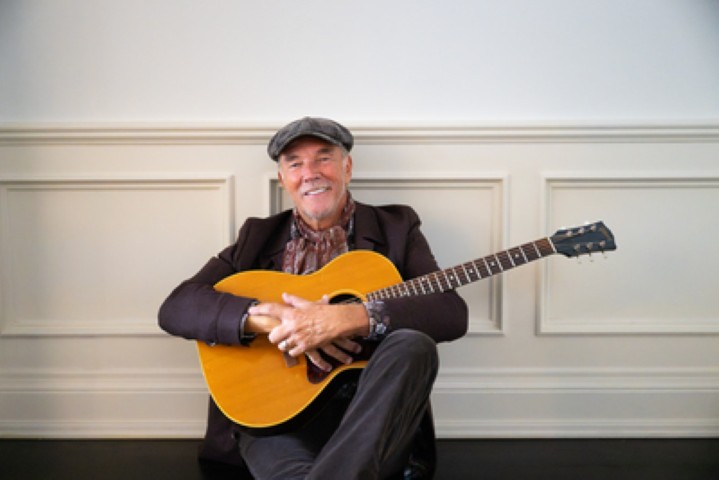
James Bruce Moore Explores Canadian Identity and Unity on “Canadian Sundown”
Toronto singer-songwriter James Bruce Moore reflects on patriotism, national identity, and the hope for a more united future with his latest single, “Canadian Sundown,” available now. The release marks the first glimpse into his upcoming album, Hope Is Medicine, recorded in Brooklyn with Grammy-winning producer Dave O’Donnell.
Inspired by the 2022 protests in Ottawa, “Canadian Sundown” explores Moore’s personal feelings of uncertainty surrounding Canada’s direction while encouraging listeners to reflect on what the country means to them.
“The song comes from a place of personal uncertainty rather than political certitude,” says Moore. “It reflects my feelings of being lost, concerned, and afraid for a country I love as aspects of its history are reconsidered or rewritten.”
The single also serves as a deeply personal tribute to Moore’s late father, a wartime tail gunner whose experiences ultimately cost him his life. Through vivid imagery and heartfelt storytelling, Moore connects his family’s history with his hopes for Canada’s future.
James Bruce Moore Finds Hope in “Canadian Sundown”
Despite its themes of uncertainty and division, “Canadian Sundown” ultimately delivers a message of hope. The song’s closing imagery features the gray jay, a resilient bird found throughout Canada’s boreal forests, representing connection and unity from coast to coast.
Produced, recorded, and mixed by O’Donnell at The Bunker Studio in Brooklyn and mastered by Ted Jensen, the single brings together an accomplished lineup of musicians, complementing Moore’s rich baritone vocals and acoustic guitar.
Moore’s musical journey spans decades, from performing in rock and roll bands as a teenager to playing London’s blues-rock club circuit and eventually releasing his debut album, Lisbeth, in 2011.
With Hope Is Medicine on the horizon, Moore continues to explore the human experience through thoughtful songwriting, personal reflection, and meaningful storytelling.
Listen to “Canadian Sundown” below and learn more about James Bruce Moore through our interview.
James Bruce Moore Interview: Canadian Sundown and Hope Is Medicine
Hi, James! Good to meet you! Care to introduce yourself to the readers for those not familiar with your music?
Thank you for the opportunity to introduce myself and my music to Canadian Beats readers. I’m James Bruce Moore, a Canadian singer-songwriter who believes deeply in the power of music to express our emotions, tell our stories, and bring people together. My songwriting is rooted in personal experiences, family, and a lifelong love for Canada. My latest song, “Canadian Sundown,” and my upcoming album, Hope Is Medicine, reflect those passions.
“Canadian Sundown” was inspired by the 2022 protests in Ottawa. What did you see happening in Canada that made you feel you needed to write this song?
I recently revisited a quote published in the Western Standard on December 29, 2021, attributed to then-Prime Minister Justin Trudeau: “We are going to end this pandemic by proceeding with the vaccination. There is still a part of the population fiercely against it. They don’t believe in science or progress and are very often misogynistic and racist. They take up some space. This leads us as a leader and as a country to make a choice, do we tolerate these people?”
The question that struck me was whether we, as Canadians, are willing to tolerate people who hold different opinions from our own.
That quote encapsulated the mood of the times for me. To be absolutely clear, my song is not about vaccinations, either for or against, nor does it support anarchy or social disorder of any kind. It is about freedom of expression, peaceful protest, openness, and recapturing what I have always believed makes Canada such a beautiful nation.
When I heard that kind of rhetoric, I sensed something had changed in our country. I became concerned about our tolerance for individual thought, opposing opinions, and personal choice.
Then I began reading about Canadians joining the trucker convoy protests in Ottawa. Whatever one’s position on the protests themselves, I was encouraged by the idea that ordinary Canadians still felt they could express themselves and have their voices heard.
There’s a line in “Canadian Sundown” that captures what I mean: “Respect the other’s point of view, listen hard and think things through. We’re humble, know from whence we come. Our country, our peace has been hard won.”
When I was in Grade 7, I served as a page at Queen’s Park in Ontario. Even as a child, I remember watching MPPs listen to one another and openly debate important issues. Disagreement was expected, but differences of opinion were not automatically grounds for ridicule. People listened, considered opposing views, and worked toward decisions informed by the people who had elected them.
When I watched the events in Ottawa unfold in February 2022, particularly how they ended, I was alarmed. I had difficulty believing that this was happening in a country of which I have always been so proud.
Whenever I travelled outside Canada, I was happy to return home to what I considered a safe, open, and welcoming country. In 2022, I feared we were becoming less tolerant, and that saddened me deeply.
I believe the pandemic left an indelible mark on all of us. The isolation, social disruption, and uncertainty were difficult enough, but somewhere along the way, I felt that something else had changed. I began seeing a degree of divisiveness and widespread anger that I had never experienced before.
I wrote “Canadian Sundown” because I needed to express those feelings and perhaps give a voice to others who felt similarly.
It’s an expression of loss, nothing more and nothing less. I don’t pretend to have all the answers about why things happened as they did, but I feel that something important has been diminished in our national character.
The song is a plea to return to the values I have always associated with Canada: kindness, tolerance, mutual respect, and a willingness to listen. It’s about the smile exchanged at a community centre or the tipping of a hat on Main Street on a Saturday morning. Those small gestures say something meaningful about who we are.
Your father was a tail gunner during the war, shot down twice, and his experiences deeply shaped your understanding of Canada. How does his legacy influence what patriotism means to you today?
Canada is a country built largely by immigrants, and despite our imperfections, we have created a society founded on acceptance, tolerance, fairness, and openness.
Around the same time that I was becoming concerned about the divisions in our country, I was also hearing discussions about re-examining our history through a modern lens and reconsidering the legacies of those who came before us.
I believe we need to understand our history honestly, including its imperfections, without losing sight of the sacrifices made by earlier generations.
My father served in the Royal Canadian Air Force, service number R93167, as a tail gunner during the Second World War. He was shot down twice. His experiences, and those of so many others who served, have always profoundly shaped my understanding of patriotism.
These were young men and women who left their homes, families, and everything familiar to face unimaginable dangers. Many never returned. Those who did were often changed forever by what they had experienced.
They did so because they believed in their country and what it stood for. They weren’t fighting for a perfect nation. No country has a perfect history. They were fighting for their Canada, with all its strengths, shortcomings, hopes, and possibilities.
I believe they made those sacrifices to preserve our freedom, our values, and our national identity.
When we discuss the difficult chapters of our past, I hope we can do so while remembering the courage and intentions of those who gave so much for future generations.
My father’s legacy reminds me that patriotism isn’t about believing your country can do no wrong. It’s about loving your country enough to recognize its imperfections while remaining committed to its highest ideals.
That is what Canada means to me, and it is a feeling I carry with tremendous pride.
You’ve described “Canadian Sundown” as a patriotic lament rather than a political statement. How do you hope the song can bring people together when Canadians seem increasingly divided?
I believe one of the defining characteristics of Canada has always been hopefulness.
No matter how difficult the times, we have found ways to pull together as a nation and try to make the future a little better for everyone.
I remember my late grandmother telling me stories about the Great Depression in the 1930s. Poor, hungry men wearing ragged clothes would knock at her back door looking for something to eat.
Although my grandparents had very little themselves, she would invite these men inside to warm themselves by the radiator and make sugar sandwiches for them.
That simple act of kindness has stayed with me throughout my life.
Helping one another as best we can, even when we don’t have much to give, represents the Canadian spirit to me. It’s how generations of newcomers have found their place in this country, with those metaphorical sugar sandwiches being passed around.
I also think about our wonderful gray jay, often called the Canada jay, which inhabits much of our northern landscape throughout the year. It can nest and raise its young in the depths of a bitterly cold February in the boreal forest.
To me, that little bird represents strength, resilience, and hope. Its ability to endure the harshest conditions offers a beautiful metaphor for our country.
I believe most Canadians are quietly proud of where they come from, and that is the spirit I wanted to capture in “Canadian Sundown.”
Let’s not forget who we are: good people living in a good, beautiful country.
My hope is that listeners will pause and consider what Canada means to them. What values do they hold dear? What makes them proud to call themselves Canadian? How can we preserve those qualities for the generations that follow?
I’m not trying to tell anyone what to believe or persuade them to adopt a particular political position.
I simply want to raise thoughtful questions that might encourage us to listen to one another, rediscover our common ground, and find a greater sense of solidarity during these difficult times.
Your upcoming album, ‘Hope Is Medicine,’ was recorded with Grammy-winning producer Dave O’Donnell. What does that title mean to you, and how does “Canadian Sundown” fit into the album’s larger message?
Hope is an incredibly powerful force. It’s the belief that a good outcome remains possible, even when circumstances seem overwhelming. It keeps us moving forward toward the possibility of better days.
Without hope, it’s very easy to surrender to despair.
The title ‘Hope Is Medicine’ comes from a deeply personal experience.
Years ago, I was hospitalized with cancer. Although I was receiving wonderful care from Canadian doctors and nurses, my future was uncertain.
I remember being confined to a hospital bed, connected to various tubes, and wondering what lay ahead.
One night, around two in the morning, I got up and walked down a dark, quiet hospital hallway. I was searching for something, anything, that I could hold on to and that might give me the strength to keep going.
What I found was hope.
I began imagining a future in which I was healthier, stronger, and able to enjoy life again. That vision of better days became something I could cling to, and it’s where the phrase ‘Hope Is Medicine’ originated.
That experience changed the way I think about adversity, healing, and the importance of believing that tomorrow can be better than today.
“Canadian Sundown” carries that same message. Although the song begins with feelings of sadness and concern for our country, its closing message is one of hope and healing.
The other five songs I recorded with the wonderful Grammy-winning producer Dave O’Donnell, including “Sweet Faith,” “Refugee,” and “Hope Is Medicine,” explore similar themes. Each approaches hope from a different perspective, and I’m looking forward to sharing them as they’re released.
I have tremendous hope for Canada’s future.
Although our sun may have gone down temporarily, I believe it has risen again and will continue to rise higher if we pull together as a nation.
That’s what I want listeners to take away from this album. Whatever difficulties we face, personally or collectively, there is always the possibility of healing, understanding, and a brighter tomorrow.
Above all, let’s remember who we are: good people in a good, beautiful country.
Connect with James Bruce Moore:
Website | Bandcamp | Facebook | Instagram