
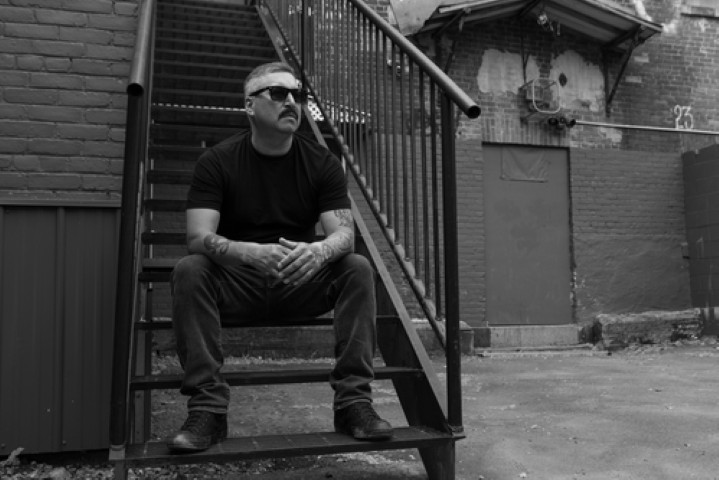
Tobique First Nation’s Mike Bern Explores the Legacy of War and Fatherhood on “The Belt”
Tobique First Nation, New Brunswick singer-songwriter Mike Bern has released “The Belt,” a haunting new single that looks unflinchingly at the lasting effects of war on one man’s fatherhood. Written from a child’s point of view, the song moves between fear, respect and an eventual understanding of a father whose battles did not end when he came home.
At the centre of “The Belt” is a household shaped by tension, one where an old belt hanging by the door becomes a quiet symbol of discipline, hardship and the kind of pain that gets passed down through generations without ever being fully spoken about. Rather than passing judgment on its subject, the song seeks to understand him, portraying a man who was tough, flawed, resilient and deeply committed to his family, someone still carrying invisible wounds long after the war itself had ended. Produced by Mathieu LeGuerrier, the track stands as a tribute to a generation of men who returned home changed and did their best to navigate fatherhood and family life in silence.
Bern captures that emotional inheritance in some of the song’s most affecting lines: “That old black belt hanging by the door / Was worn down thin from years before / Still echoes through these walls / Pain rolls on / Pain rolls on / A house can feel like that / When the war never leaves a man.” Rather than dwelling on punishment itself, the lyrics point to the lingering effects of trauma, showing how the wounds of war can quietly shape a family long after the fighting has ended.
“The Belt” continues a run of releases in which Bern has drawn directly on personal memory and lived experience, a throughline that has defined his songwriting since his earliest work. Raised along the Tobique and Wolastoq rivers, Bern found his way to songwriting during a stay in rehab, when a counsellor recognised the poetic, songlike quality of his writing, a turning point that set him on the path to the career he has built since.
That path has included two acclaimed albums, ‘Waponahkew’ and ‘Ancestors,’ along with a string of singles including “First Mother,” “Reverberation,” “New World,” “Echoes,” “We Are the Stars” and, most recently, “Into The River.” Several of these tracks climbed to the top of the Indigenous Music Countdown, and Bern’s catalogue has earned nominations for three Native American Music Awards. His work has been championed by outlets including Tinnitist, Cashbox Canada and Roots Music Canada, cementing his place as one of Canada’s most consistent Indigenous folk-rock voices.
Before launching his solo career, Bern spent years fronting the bands Kickin’ Krotch and District Avenue, opening for acts including Seaway, The Trews, One Bad Son and The Motorleague, and picking up two awards for a District Avenue music video that went on to be featured at the 2018 Pyeongchang Winter Olympics. Those years on the road shaped the storyteller he has become, someone equally comfortable channelling grief, ancestry and hard family truths into song.
“The Belt” arrives as the leading single from Bern’s upcoming seven song album, expected later this year, a project that continues to explore themes of healing, family, Indigenous identity, and finding hope through life’s hardest moments. With this new single, Mike Bern gives voice to experiences that continue to resonate across generations, honouring his Wolastoqey roots while inviting listeners from every background into a story that is deeply, unmistakably human.
Hi, Mike! Good to see you again! Care to introduce yourself to the readers for those not familiar with your music?
It’s great to be here. I’m Mike Bern from Neqotkuk at Wolastoqey Nation, and I write songs about life as I’ve lived it and the stories I’ve been trusted to carry. Songwriting has always been my way of making sense of things that are hard to talk about. Some songs come from my own experiences, others from listening to family, Elders, and people who’ve shared parts of their lives with me. I don’t write songs just to entertain people, I write them because I hope they help someone feel seen, understood, or maybe even start a conversation that needs to happen.
“The Belt” doesn’t villainize the father at the centre of the story. It tries to understand him. Why was empathy more important to you than blame when writing this song?
I’ve spent a lot of my life thinking about how pain gets passed from one generation to the next. I’ve seen it in families, I’ve seen it in my own life, and I’ve seen how easy it is to judge someone without ever knowing what they carried before they became a parent.
When I wrote this song, I didn’t want to point fingers. I wanted people to ask, “What happened to him?” instead of only asking, “What’s wrong with him?” That doesn’t erase the hurt or make what happened okay, but I believe understanding where that pain comes from gives us a better chance of breaking the cycle. Blame keeps people apart. Empathy opens the door to healing.
One of the most powerful lines is, “A house can feel like that when the war never leaves a man.” What do you think we still don’t understand about the ways trauma follows people home?
I think people underestimate how long trauma lives inside someone. It doesn’t always look like sadness. Sometimes it looks like silence, anger, addiction, fear, or someone who just doesn’t know how to show love because no one ever showed it to them.
Growing up, I saw how the things people never talked about could shape an entire family. The hurt doesn’t stay with one person, it finds its way into the next generation if nobody deals with it. That’s what that line means to me. Sometimes the war is over, but inside that person it’s still happening every single day.
So many families, Indigenous and non-Indigenous alike, have lived with generational trauma that was never openly discussed. What conversations are you hoping this song might start around kitchen tables?
I hope it gives families permission to tell the truth.
There are so many things that older generations carried because that’s just how they survived. They weren’t taught to talk about their feelings, and many believed keeping everything inside made them strong. But silence has a cost.
If this song gets someone to ask their dad or their grandfather about what they lived through, or gives someone the courage to finally say, “This is what happened to me,” then it’s done something meaningful. Healing starts with honesty, and sometimes all it takes is one person willing to speak first.
When someone hears “The Belt” and sees their own father, grandfather, or even themselves in it, what do you hope they take away after the song ends?
More than anything, I hope they leave knowing that our past doesn’t have to define our future.
I know what it’s like to carry painful memories, and I know how easy it is to believe that’s just the way life is. But I don’t believe that anymore. I believe people can heal. I believe families can heal. Sometimes it takes forgiveness, sometimes it takes accountability, and sometimes it just takes someone deciding that the hurt ends with them.
If this song helps even one person put down a burden they’ve been carrying for years, or helps one parent choose a different path with their own children, then every word I wrote was worth it.