
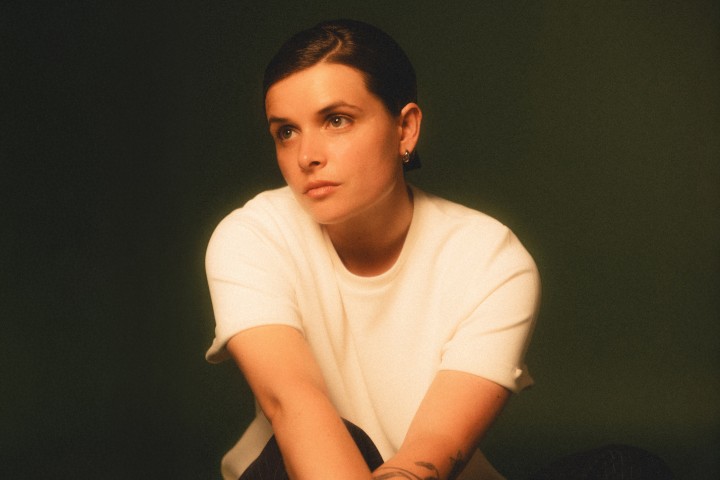
Gentiane MG Finds Beauty, Forgiveness, and Connection on New Album Can You Hear the Birds?
Montreal pianist and composer Gentiane MG returns with her fourth album, Can You Hear the Birds?, a deeply expressive and fully realized artistic statement marking a key turning point in her career. Known for her intuitive, listening-driven trio approach, Gentiane continues to shape a sound that balances fragility and strength while exploring connection in all its forms—between people, nature, memory, and self.
Performed with longtime collaborators bassist Levi Dover and drummer Mark Nelson, the album unfolds with a rare sense of immediacy, shaped by collective instinct rather than rigid structure.
The release cycle also brings a major live milestone: Gentiane MG will appear at the Toronto Jazz Festival on June 24, 2026 at 8:30 pm at Jazz Bistro in a special co-presentation with the venue, with tickets on sale now. The performance arrives as momentum builds around the record and her expanding presence on major Canadian stages.
Review
Montreal pianist and composer Gentiane MG delivers a restrained and deeply considered instrumental statement on Can You Hear the Birds?, an album that prioritizes space, listening, and collective intuition over technical display. Across the record, the trio lets ideas unfold slowly and organically, creating a sound world that feels deliberate yet unforced.
The opening track, “Two Lives, One Heart,” begins in a slow, unhurried space built on delicate, lyrical piano phrasing. As it develops, it gradually builds mid-song, gaining momentum and emotional weight without losing its reflective core. Rather than aiming for a dramatic peak, it grows in layers, moving naturally from intimacy toward a wider sense of connection and inner balance.
The title track, “Can You Hear the Birds?”, is one of the more animated moments, driven by a searching piano line and steady forward motion. The trio feels especially alive here, with bassist Levi Dover grounding the harmony and drummer Mark Nelson shaping the flow through fluid textures and subtle rhythmic colour. Instead of locking into a fixed groove, the music stays in constant dialogue, keeping the performance open and responsive.
Across the record, quieter, introspective passages sit alongside moments of lift and movement, giving the album a balanced emotional arc. It feels grounded yet open-ended, unfolding with patience and rewarding close, attentive listening from start to finish.
First off, care to introduce yourself to our readers?
I am a pianist and composer based in Montreal. I was born in Northern Quebec and have lived in Montreal for the biggest part of my life. My full name is Gentiane Michaud-Gagnon, but I use Gentiane MG as my artist name.
Can You Hear the Birds? feels deeply rooted in connection—what inspired this shift from a more inward focus to something more outward and expansive?
While writing this music, I made a conscious effort to change my relationship with the outside world, seeking new experiences and deeper connections with the people around me. I was essentially looking to thrive and feel alive on a daily basis. It began with an improvised trip in the jungle in Mexico with new friends, where we had a unique chance to experience wildlife together in a way I had never before in my life, and to deeply connect as people. This is where I met Sylvain, my graphic designer, for the first time. Only later did I discover him as a visual artist, and he eventually became part of the project as the visual director. I believe the spirit of Can You Hear the Birds? was born there.
Your trio’s approach is described as highly interactive and rooted in listening rather than intellectual construction. Can you walk us through what that looks like in practice?
I wanted this repertoire to feel alive, free, and deeply connected, so I taught the music entirely by ear rather than using charts. We sang the melodies together until the music became internalized through listening and feeling rather than through analysis. I immediately felt a shift in the way the band was approaching this new repertoire. We quickly connected in a special way, and it felt like the three of us had truly internalized it through our ears and hearts.
There’s a strong sense of immediacy and “lived experience” in this album—how do you capture that in the studio setting?
During the learning process, I realized that to achieve a sense of immediacy and “lived experience” in the recording, we needed to perform the music live several times. We toured around Quebec for a week, allowing the repertoire to settle and come alive through performance. By the time we entered the studio, everyone had deeply internalized the music. We recorded together in the same room so we could hear each other acoustically and clearly see and feel one another. I believe this allowed us to focus fully on communication, sound, and presence, letting a special energy of spontaneity and expressivity emerge.
You’ve worked with bassist Levi Dover since the beginning—how has that long-standing musical relationship influenced your evolution as an artist?
Levi and I come from very different backgrounds. I grew up playing and performing classical music with formal training, while he played in rock bands before later attending music school. We met at McGill University while I was doing my master’s degree, with jazz as our common ground. Our backgrounds have always complemented each other. Levi has always had a unique approach to rhythm and a keen sense of the different roles within a band. Early on, this influenced my conception of group playing, how I conceived of my role within my own band and how I learned to make compositional choices that would enhance each musician’s voice.
With Mark Nelson joining three years ago, how did his presence reshape or expand the trio’s sound?
I continue to be struck by Mark’s level of focus and passion. Mark is a well-rounded musician with a strong personality as a drummer, bringing a unique energy, freshness, and fire to the band. His highly reactive playing allows for lots of creativity in every situation, whether on stage or in the studio. He isn’t afraid to take risks, which is an invaluable asset for this music. Mark’s sound is bright and intense, with a wide palette of colours, and I think it has really shaped this new record into what it is.
With this album embracing openness and connection, where do you see your music heading next?
I’m thinking about experimenting with a solo record, but I’m also always looking ahead to the next trio collection. I love this format, and this trio is definitely here to stay. For the rest, I guess that’s part of the excitement. I know I’ll write again soon, when I feel I have something meaningful to say, but for now, it’s still a blank page waiting to be filled.