New Brunswick Soul Singer-Songwriter Ayden Hutch Debuts Single “Waitin’ On Your Lovin'”
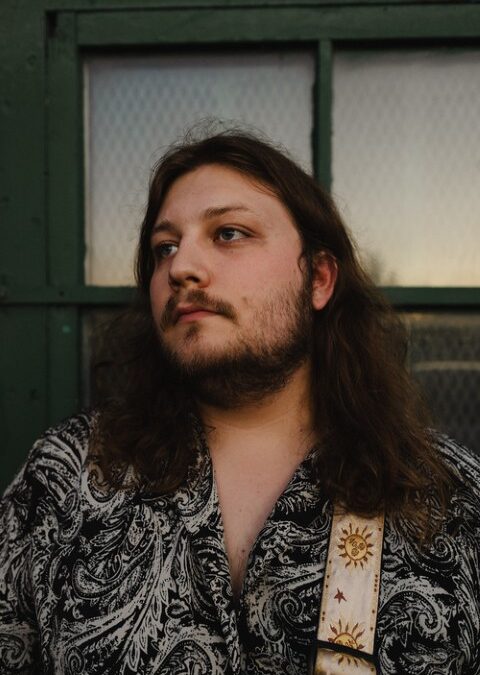
Ayden Hutch releases his debut single, “Waitin’ On Your Lovin’,” out now, the first taste of his debut album, Sadness, Anger, & Something Greater, due October 2. The song sets the tone for a record built on vintage soul and R&B warmth, tracked entirely to analog tape.
Originally from Bathurst, NB, Hutch studied jazz guitar in the virtuoso program at Cégep de Drummondville, QC, and spent years active in New Brunswick projects including Ananas and petipé. On stage, his show is built around a high-calibre four-piece ensemble defined by vintage groove, soulful vocals and sophisticated arrangements that move between jazz, R&B and blues, fronted by Hutch’s own guitar work and backed by a tight, groovy rhythm section.
Sadness, Anger, & Something Greater has been nearly two years in the making, and it maps directly onto a turbulent 2024 in Hutch’s own life. A difficult breakup left him devastated, that heartbreak curdled into anger, and eventually he found someone who makes him genuinely happy. He wrote constantly through all of it, and the songs sorted themselves naturally into three threads that became the album’s backbone: sad songs, angry songs and, finally, happier love songs.
“Waitin’ On Your Lovin'” belongs to that last category, though its longing is far from settled.
“I wrote ‘Waitin’ On Your Lovin’’ the day after I met someone who is now very special to me,” Hutch says. “I wrote it within maybe an hour, as the words just made sense and really flowed.”
The song speaks to real feelings for someone who, at the time, felt out of reach, with desire and longing for something he could not, or should not, have sitting at its centre.
Hutch recorded the single and the album at Studio 345 in Sainte-Hélène-de-Bagot, QC, with his best friend Sam Mallais, who produced, engineered and mixed the project. Chasing the sound of his favourite era, 70s soul and R&B, the pair committed the whole record to analog tape.
“I love the process as it forces you to commit to certain things and really moves most of the load to before ever having to press record,” Hutch explains. “We really work the songs and get them to where they need to be beforehand, as there is no copy, paste or undo.”
The sessions leaned heavily on friendship as much as musicianship. Sam Newman, a bass player by trade and one of Hutch’s closest friends for a decade, played drums across the entire record and helped mix alongside Mallais, while James Forest, a friend from St-Nazaire, QC, handled bass.
“It meant a lot to me to have people who have been close to my musical development be a part of the record,” Hutch says. “We truly had an amazing time. The whole experience felt more akin to jamming with friends than producing an album.”
Hutch takes the songs on the road this fall with his touring band, bassist Sam Newman, drummer Ismaël Chagnon and guitarist Loïk Martin.
Hi, Ayden! Good to see you again! Care to introduce yourself to the readers for those not familiar with your music?
Hey everyone! I’m from Bathurst, NB, and I play soul/R&B music with some blues and jazz influences. I’m a guitarist by trade but I’ve experimented with many instruments over the years such as bass and piano. I’ve also learned how to sing by myself and started writing seriously around 2024. I’ve played in different projects around New Brunswick and Quebec over the last few years and am now ready to launch my first solo album, Sadness, Anger, & Something Greater.
This album is called Sadness, Anger, & Something Greater, and those aren’t just emotions, they’re almost chapters of your life. Looking back now, did you realize you were writing an album while you were living it, or did the story only become clear once you stepped back and saw the songs together?
It took me a while to nail down that title. Over a year even. As I was writing these songs, I wasn’t thinking of it as me creating an album. It was a way for me to process and put into words what I was feeling at the time. As I was dealing with the difficult breakup I had in early 2024, I was writing all the time, so the stories closely followed my own emotional development throughout. When it came time to name the album, I knew I didn’t want to name it after a single song on the album, as I felt it negated the other 2 significant emotions I felt during that time. There’s a line from a song on the album titled “Still Holding On” that ended up really clicking for me on the title. It goes “Sadness turned to anger, turned to the thought of something greater”. I felt that it perfectly represents everything the album has to say.
You wrote “Waitin’ On Your Lovin'” in about an hour, the day after meeting someone who would become very important to you. Those first feelings can be exciting, but they’re also uncertain. What was happening inside you that made the song arrive so completely, before the relationship itself even existed?
I knew that there was something there, definitely on my end. I had never really felt a connection like that before with someone and it felt right. I started running back the night before in my head and realized that there could be a song there. Once I sat down with some music I had already composed, I just started writing. I was imagining that the relationship was a sure thing, even though we had only just met.
You chose to record the entire album to analog tape in an era where almost everything can be fixed digitally. That feels like more than a production decision. Was committing to those performances also a way of committing to the emotions behind them, imperfections and all?
Absolutely! We wanted this album to feel very real and raw. We felt that “over-producing” the songs, in the way more modern productions do wouldn’t convey the emotions I was writing about. My influences are also rooted in analog vintage production so the obvious route for us was to do it for real.
Some of the people who made this record with you have also been part of your musical journey for years. When you’re making an album that’s this personal, how important is it to be surrounded by people who already know who you are, instead of people who are just there to play the notes?
It was very important to me. These people had seen me throughout my breakup and heard me rant and rant and be devastated. They knew the subjects of these songs and I believe that helped their approach as a part of the team, whether it be on an instrument or behind the sound board. I find that the music conveys very well the emotions of the songs. Without the words, I believe you’d still be able to tell “ok he’s angry” or “ok he’s in love”. I think that everyone helps amplify the messages of these songs.