
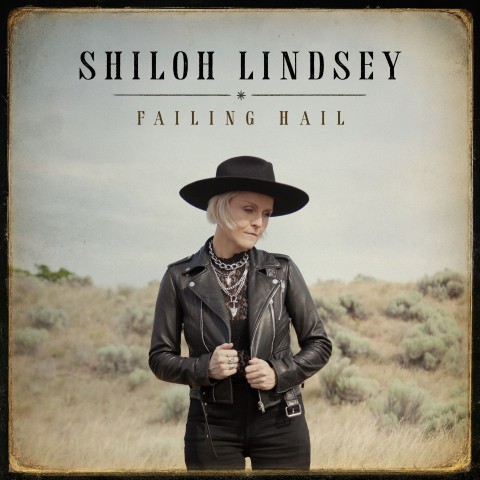
Shiloh Lindsey Finds Hope in Life’s Harshest Storms on Tender Alt-Country Single “Failing Hail”
Canadian singer-songwriter Shiloh Lindsey shares “Failing Hail,” a tender, bittersweet, and quietly hopeful alt-country ballad drawn from one of the most personal moments on her forthcoming album, The Western Veil, set for release on November 6th, 2026. Blending the warmth of Canadiana, indie folk intimacy, and roots rock restraint, the single transforms a late-night message between siblings into a moving meditation on resilience, compassion, and the ways we carry one another through life’s darkest seasons.
The song began not with a guitar, but with a text message. While Shiloh was recovering from the devastating motorcycle accident that nearly claimed her leg, her oldest brother found himself awake at two in the morning wrestling with demons of his own. Hoping, as he later told her, to “fool them with some nicer thoughts,” he wrote a poem and sent it to his younger sister.
Deeply moved by his words, Shiloh eventually transformed the poem into a song.
“It became about the quiet ways we carry one another through difficult times,” she explains, “Sometimes hope comes from someone else when you’re having trouble finding it yourself.”
Its title comes directly from one of the poem’s most striking images: The bad times will fail like melting hail. The metaphor immediately resonated with Shiloh, who saw something profoundly comforting in the idea that even life’s fiercest storms cannot last forever.
“Hail can arrive violently and suddenly and feel overwhelming while you’re caught in it,” she says. “But it can’t sustain itself – it melts.”
That perspective makes “Failing Hail” unlike any other song in her catalogue. While much of Shiloh’s songwriting emerges from her own lived experience, this track began through someone else’s eyes.
“I wanted to preserve the spirit and much of the language of what my brother originally sent me,” she explains. “It’s someone who loves me looking in from the outside and saying, ‘I see what you’re going through, and I believe you’re going to make it through.’”
The recording itself arrived just as unexpectedly. Originally absent from the sessions for The Western Veil, “Failing Hail” entered the picture after the band found themselves with unexpected studio time. Producer Jesse Waldman asked whether Shiloh had another song worth trying. The musicians had never rehearsed it together. Hearing the song for the very first time, they recorded only a handful of takes before discovering what would become the final performance.
“There was something really special about not having the chance to overthink it,” Shiloh recalls. “Everyone was simply listening to each other and responding to the song in the moment.”
That spontaneity became central to the production. Rather than polishing away the imperfections, the band embraced the loose, organic performance, allowing warmth and emotional honesty to guide every decision. The understated arrangement leaves space for the lyrics to breathe, balancing melancholy with quiet optimism rather than dramatic catharsis.
First off, care to introduce yourself to our readers?
I’m Shiloh Lindsey, a singer-songwriter originally from Alberta and now based in Vancouver. I’ve been making music for a long time, mostly somewhere in the alt-country, folk and roots world. I took a fairly long break from releasing records, and the last couple of years completely changed my life after I was badly injured in a motorcycle accident. My new record, “The Western Veil”, came out of that period, although not every song is directly about the accident. It’s really a record about mortality, resilience, love, the natural world, and what happens when the life you thought you had gets completely rearranged.
“Failing Hail” began with a poem your brother sent you during an incredibly difficult period in both of your lives. What do you remember most about receiving that message for the first time?
I was in hospital and going through an incredibly difficult stretch of surgeries and uncertainty about what was going to happen with my leg and my life. My brother Delvin text me this poem, and there was something incredibly comforting about having family reach through all of that and remind me that things change. Nothing stays terrible forever.
When did you realize that his poem could become a song, and how did you approach turning something so personal to him into something that also felt authentically yours?
I don’t think I really realized it could become a song beforehand. One day I sat down with a beer, picked up my guitar, and my phone was open beside me to his poem. I started playing, and it just sort of happened. I followed the song as it unveiled itself.
A lot of Delvin’s words are there verbatim, so I didn’t want to force them into something or reshape them until they became mine. I tried to let the music come naturally around his words and add my own voice where it felt right.
The line “The bad times will fail like melting hail” became the inspiration for the song’s title. Why did that particular image resonate so strongly with you?
Hail is such an Alberta image to me. I spent a lot of my childhood there, and my brother still lives there, so there’s something very familiar about those sudden, violent prairie storms. Hail can come down so hard that in the moment it feels almost apocalyptic, and then not long afterward it’s melting into the ground.
When you’re inside something painful or frightening, it can feel permanent. But eventually things shift. The storm loses its force.
The phrase itself “Failing hail” is a little strange and imperfect. And that resonates with me, because I am also a little strange and fully imperfect.
The band had never rehearsed the song together before recording it, and the final performance came from only a handful of takes. What do you hear in that recording that you think might have been lost if you had spent more time perfecting it?
There’s a vulnerability to it that I think we could have accidentally rehearsed out of the song.
“Failing Hail” balances sadness with a sense that even the worst storms eventually pass. Is that tension between darkness and hope something that carries through the rest of The Western Veil?
Very much so. I don’t think of “The Western Veil” as an optimistic record exactly, but I also don’t think it’s hopeless.
There’s a lot of darkness on it — mortality, fear, violence, grief, environmental destruction, the ways we protect ourselves from other people — but there’s also humour, tenderness, stubbornness and a real desire to keep living.
I’m interested in what happens when you look directly at difficult things without pretending they aren’t there, but you still choose to find beauty and meaning inside your life.
With The Western Veil arriving on November 6, what does this album represent for you personally, and what do you hope listeners understand about Shiloh Lindsey after hearing it from beginning to end?
After the accident I started thinking a lot about my higher self — that wiser, more intuitive part of me that I sometimes feel I can reach through making art. I began calling her The Western Veil, and I still do. To me she’s a kind of sage, that part of myself that seems to communicate most clearly through song.
For a while I thought about using The Western Veil as my moniker instead of my real name, but eventually decided it belonged to the record instead.
I hope listeners hear someone willing to look at difficult things without losing her sense of humour or love for being alive.