
Chicago’s MV Wells Delivers Le Dauphin, A Sharp and Lush Orchestral Pop Debut
Chicago’s MV Wells steps out front with Le Dauphin, his debut solo album, arriving May 29, a sharp, melody-first mix of indie rock, orchestral pop, and singer-songwriter craft that leans as much on Harry Nilsson and Burt Bacharach as it does the left-field pop instincts of Electric Light Orchestra and early solo John Lennon. After a decade embedded in the city’s indie circuit, from the scrappy hooks of NE-HI to the synth-leaning detours of Spun Out, Wells pivots toward something more deliberate here. The edges are still there, but the focus sharpens. This is a songwriter’s record, built on melody first, with a deep pull toward classic pop structure and a refusal to sand down its weirder instincts. Even the album’s visual world leans into that spirit, with artwork by Paul Whitehead, known for his work with early Genesis.
Recorded in Chicago at Palisade and The Mango Pit with longtime collaborator and cousin Joshua Wells (Black Mountain, Destroyer), Le Dauphin finds Wells working across a broader palette than anything he’s released before. Strings, horns, synth textures, and layered vocal arrangements move in and out of the frame, giving the record a sense of scale without losing its core intimacy. You can hear the lineage, Bacharach’s sense of form, Nilsson’s off-center charm, the Beach Boys’ stacked harmonies, but it never settles into pastiche. There’s too much friction in the writing, too much personality in the delivery.
Wells has always had a knack for hooks, but here they land differently. The melodies feel lived-in, less like quick hits and more like lines that stick around longer than expected. His vocal carries a dry, knowing tone, equal parts charm and side-eye, pulling from the tradition of pub rock lifers like Nick Lowe and Wreckless Eric while staying rooted in the Midwest scenes that shaped him. It’s that balance that gives Le Dauphin its character: polished on the surface, but a little cracked if you look closer. The record doesn’t stay in one lane for long. There are moments that lean bright and immediate, built on piano runs, warm brass, and clean rhythmic swing, and others that drift into something more cosmic and unsettled, nodding toward early prog textures and art-pop left turns. Those shifts never feel like detours. They feel like part of the same conversation, a songwriter testing how far a pop song can stretch before it snaps.
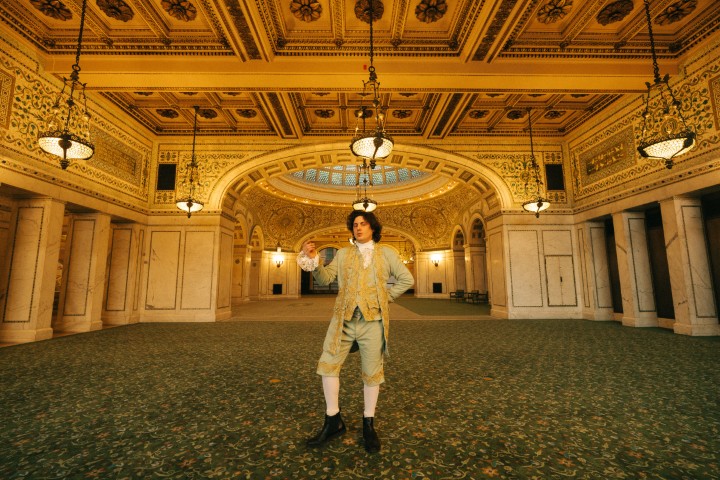
Behind the scenes, the album benefits from a tight, intuitive cast. Joshua Wells handles drums, percussion, and much of the record’s sonic architecture, including string arrangements that give several tracks their lift and weight. Contributions from Olivia Love on violin, Benjamin Kalb on cello, and Joe Lill on trumpet and flugelhorn add color without crowding the mix, while additional sound design threads subtle movement through the record’s quieter corners. Everything serves the song, even when the arrangements push outward. That same attention carries through visually, with photography from Alexa Viscius and additional photography by Katherine Levi.
Wells’ path to this record runs through years of touring, from Chicago clubs to Midwestern taverns and festival stages, building a reputation as a songwriter who could land a hook without overthinking it. Le Dauphin doesn’t abandon that instinct, it refines it. There’s more space, more intention, and a clear sense of an artist stepping into his own lane rather than orbiting a scene. Le Dauphin is a debut in name, but not in experience. It’s the sound of someone who’s spent years figuring out what works, what doesn’t, and what’s worth keeping. The result is a record that feels both classic and quietly off-kilter, grounded in pop tradition but never fully comfortable sitting still. It doesn’t shout for attention. It just stays with you.