
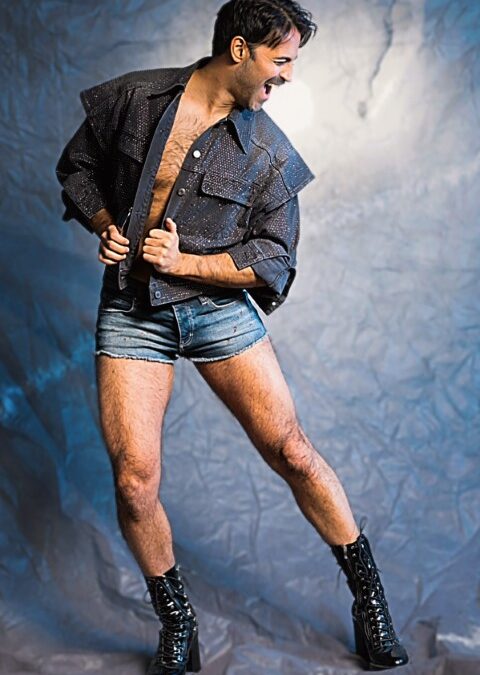
Toronto’s Rising Indie Pop Visionary Unleashes Lead Single “Dancefloor Shoes,” a Euphoric Anthem of Liberation, Presence, and Queer Nocturnal Joy
Toronto-based indie pop artist Aman Dhesi announces the release of his debut album The Restless Night, out today via Zedd Records, alongside the album’s opening statement, the lead single “Dancefloor Shoes.” Produced by Mark Zubek and Dhesi himself, the track arrives as a shimmering, propulsive declaration of self-liberation — a dance-floor ready anthem designed to move bodies and spirits in equal measure. With its pulsing synth architecture and irresistible Saturday-night energy, “Dancefloor Shoes” signals the full arrival of one of independent pop’s most compelling new voices.
Originally from North Delta, B.C. — a suburb nestled in the Lower Mainland outside Vancouver — Dhesi has built a distinctive sonic identity across years of dedicated craft and community. His 2019 debut EP Day One introduced defining tracks “Another Never Ever” and “Rise Up,” establishing a sound rooted in club intensity and confessional honesty. Since then, he has earned multiple #1 placements on independent queer music charts while cementing his reputation as a dynamic live performer across Toronto’s vibrant music landscape. The Restless Night is his boldest and most fully realised vision yet.
“Dancefloor Shoes” opens with an invitation and accelerates into pure communion. The song’s narrator slips on those shiny black leather soles and steps into a world of possibility, arriving fully present to claim the night. As Dhesi writes in the chorus: “I got my dancefloor shoes / Feelin’ in the mood / Jeans huggin’ tight / C’mon grab that mic.” The lyric is deceptively simple — joyful, stylish, and completely alive — yet it carries the weight of someone choosing to show up wholly and openly for the first time. By the time Dhesi sings “I just wanna’ be free tonight,” the desire has transcended the dancefloor entirely.
The album from which the single is drawn was born during a period of profound personal transformation for Dhesi. Writing and producing through the clarity of newfound sobriety, he channelled a heightened awareness of self into every track.
“There’s a strange clarity that comes with sobriety,” Dhesi reflects. “You’re no longer numbing the chaos — you’re standing inside it, fully awake.”
That lucidity courses through “Dancefloor Shoes,” elevating what could be a conventional club track into something far more intentional: a portrait of radical presence, of seeking freedom on your own terms, with nothing dulling the senses or softening the feeling.
Crafted alongside producer Mark Zubek, the sonic palette of “Dancefloor Shoes” draws from the glistening synth textures of 80s-inspired production while surging forward with the kineticism of contemporary dance-pop. The result is a cinematic, after-dark sound that feels both nostalgic and immediately of the moment — strobe lights and slow dancing rendered in shimmering electronic detail. As an openly gay South-Asian and Sikh man and proud member of the BIPOC and LGBTQIA+ community, Dhesi brings a perspective that is urgently needed within the Canadian indie pop landscape: one where queer nightlife, desire, and emotional release are rendered with full artistic seriousness and celebratory beauty.
The Restless Night, as a full body of work, expands Dhesi’s vision into a shimmering, nocturnal journey through longing, eroticism, resilience, and the restless pulse of queer nightlife. The album’s 13 tracks — including the Belinda Carlisle-honouring cover of “Mad About You” — trace a conversation between Dhesi’s past and emerging selves, mapping the terrain of big feelings, big nights, and the extraordinary courage it takes to inhabit one’s own life without armour.
“This isn’t an album about escaping the night,” Dhesi says. “It’s about learning how to exist inside it — lucid, open, unarmoured.”
Care to introduce yourself to readers who may not be familiar with your music?
My name is Aman Dhesi. I’m an independent pop artist based in Toronto, and the music I make is very much inspired by the emotional world of queer nightlife. I’ve always been drawn to the kind of pop music that feels big and cinematic but still carries a lot of emotional weight. Growing up, I loved artists from the 80s, 90s, and early 2000s who understood that a dance song could also hold heartbreak, longing, joy, and vulnerability all at the same time. That sensibility has always stayed with me.
My album The Restless Night grew out of that environment. On the surface it’s a dance record inspired by nightlife, but underneath that it’s really about identity, longing, freedom, heartbreak, and the emotional journey that happens when you finally stop hiding parts of who you are. The album actually moves through a bit of a transformation. The first half has a lot of intensity and defiance to it. Those songs feel bold and almost armored, like someone stepping out into the world and declaring who they are. As the record progresses, it becomes softer and more vulnerable. By the end, it’s less about proving anything and more about allowing yourself to feel connection and love openly.
At the end of the day my music is really about freedom. It’s about that moment when you stop editing yourself and allow the fullest version of who you are to exist out in the open. That spirit runs through the entire album.
“Dancefloor Shoes” feels like a celebration of showing up fully as yourself. What moment in your life made you realize it was finally time to step onto that dance floor without holding anything back?
For me the dance floor has always meant something bigger than just going out and having fun. It feels like a communal ritual that connects us to a much larger queer history. There’s a phrase people sometimes say when talking about queer activism that has always stayed with me. During the day we protested, and at night we danced. I love that idea because it captures something really powerful about our community.
The dance floor has always been one of the places where queer people could reclaim joy and expression even when the outside world wasn’t always welcoming. When I’m standing on a dance floor at one of my usual spots in Toronto, like the Black Eagle, and I look around the room, I see this incredibly vibrant mix of people showing up exactly as they are. There are people who are flamboyant, people who are quiet observers, couples holding hands, leather guys, drag performers. It’s this beautiful cross section of humanity. There’s something incredibly moving about that because it reminds you that you’re part of a community that has fought hard to create these spaces.
On another level the dance floor is also a metaphor that runs throughout the album. A lot of us spend years editing ourselves, toning parts of ourselves down so we can move through the world without friction. Eventually you reach a point where you realize you can’t keep doing that anymore. Writing and recording this album was that turning point for me. Instead of hiding those parts of myself I decided to amplify them. Songs like Dancefloor Shoes carry that sense of joy and liberation, while songs like Dance or Die and Renegade Kiss tap into the frustration and anger that can build up when you’ve spent too long holding yourself back. Stepping onto the dance floor without holding anything back is both literal and symbolic for me. It’s about dancing, but it’s also about finally choosing not to hide.
You wrote much of The Restless Night during sobriety. How did that clarity change the way you write about nightlife, emotion, and freedom?
Writing this album while sober changed everything about how I experienced the world I was writing about. Before sobriety nightlife often involved a certain amount of losing myself. There was a sense of escape built into it. Once I got sober that dynamic shifted completely. Suddenly I wasn’t trying to disappear into the night anymore. I was present for it.
That clarity gave me a completely different perspective on my own life. I was able to look back on relationships, heartbreaks, moments of anger, and moments of joy and start connecting the dots. When you’re sober you’re not running from your emotions anymore. You’re learning how to sit with them and understand them. Songwriting became one of the ways I processed a lot of that.
Some of the songs on the album tap into emotions that had been buried for a long time. There’s anger in there that comes from feeling othered for much of my life, from growing up knowing I was different but not always having the language or the space to express it. That energy shows up in songs like Dance or Die and Renegade Kiss, which carry a very defiant spirit.
At the same time there are moments of vulnerability that I probably wouldn’t have been able to access before. Time Machine is about looking back at a past relationship and wondering what you might have done differently if you had the chance. The Last Time is one of the most emotionally exposed songs on the album. Those are the kinds of feelings you can only write about honestly when you stop trying to outrun them.
Sobriety also allowed me to step more fully into my identity. For much of my life being openly gay felt like something I had to manage or tone down depending on the environment I was in. Writing this album was one of the first times I allowed myself to express that part of myself without hesitation. Instead of hiding it, I leaned into it.
That’s part of where the title The Restless Night comes from. I think there’s a kind of restlessness that runs through queer culture. We feel deeply, we love intensely, we fight for our right to exist, and we have this rebellious desire to live as our most authentic selves even when the world tries to shrink us. That energy shows up everywhere in queer nightlife. Sobriety gave me the clarity to recognize that thread and weave it through the album.
The album is rooted in queer nightlife. What does the dance floor represent to you beyond just music and partying?
The dance floor is one of the few places where people can exist without editing themselves. In everyday life we’re constantly aware of how we’re being perceived. We adjust how we speak, how we behave, and how much of our personality we reveal depending on the environment we’re in. There’s often pressure to present a controlled version of yourself.
The dance floor disrupts that. It allows people to release all of that tension. Dancing is one of the most physical expressions of freedom we have. When people dance they’re letting go of inhibition and expressing something that doesn’t always have words.
For queer people that space has historically carried even more meaning. In many environments people still feel the need to hide parts of who they are. The dance floor has long been one of the places where that pressure disappears. It becomes a place where people can be loud, expressive, emotional, flamboyant, rebellious, however they want to show up.
There’s also a historical dimension to it. Many queer elders fought incredibly hard so that spaces like this could exist openly. When I step onto a dance floor today I sometimes think about the generations that came before us who created these spaces and defended them. Dancing becomes more than just a night out. It becomes a communal celebration of survival and resilience.
That spirit is woven through the album, especially the title track The Restless Night. That song is very much about honoring the people who paved the way for us to gather openly, celebrate openly, and exist without shame.
As an openly gay South Asian Sikh artist in indie pop, what does visibility mean to you when you step on stage?
When I’m creating music I’m usually thinking about emotion and lived experience. I’m thinking about love, longing, heartbreak, freedom, and the experiences that shape us. But at the same time I’m aware that representation matters because I remember what it felt like growing up without seeing much of it.
I grew up in British Columbia and when I was younger, trying to understand who I was, I didn’t really see people who looked like me occupying the kind of creative space I wanted to be in, especially as openly queer artists. Most of the musicians and performers I admired came from very different backgrounds. I loved their work, but there was still a sense of distance there.
So visibility becomes meaningful in a quieter way. It’s not about trying to represent an entire community or carry the weight of that identity on my shoulders. It’s simply about showing up honestly as myself and with a fierce pride in who I am and where I come from.
If someone in the audience sees me on stage singing openly about queer desire, heartbreak, joy, rebellion, and the journey of becoming comfortable in your own skin, and that helps them feel a little less alone in their own experience, then that means a lot to me.
When people grow up without seeing reflections of themselves in culture it can be hard to imagine certain possibilities for their own lives. If my work helps someone see that it’s possible to exist fully as who they are, culturally, emotionally, creatively, or personally, then that’s the most meaningful kind of visibility I could hope for.
Ultimately stepping on stage is an act of honesty. I’m not trying to embody a label or a category. I’m simply trying to show up as my full self. And if someone out there sees themselves in that and feels a little more empowered to live their own truth, then that connection is incredibly powerful.