
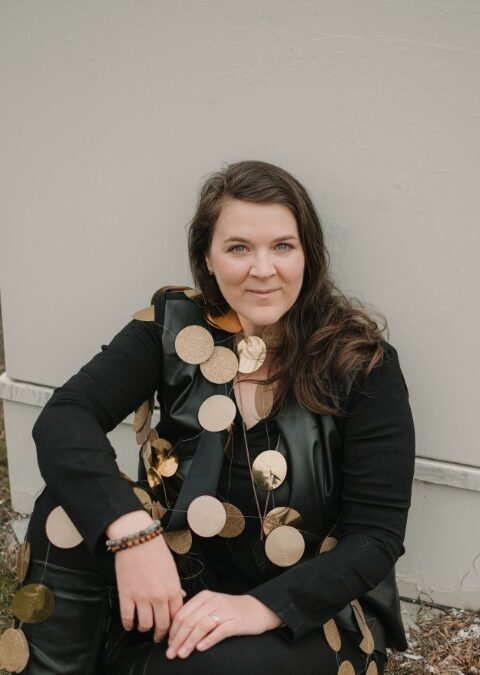
Calgary Indie Folk-Pop Artist S.K. Wellington Shares New Single “Honey Slow Down”
Calgary singer-songwriter S.K. Wellington steps into a new sonic chapter with the release of her latest single, “Honey Slow Down.” Blending her folk-rooted songwriting with a more pop-driven sound, the track captures the dizzying rush of an unexpected connection, pairing pulsing bass and retro-leaning synths with Wellington’s intimate, lyric-forward storytelling. With the single kicking off a new run of releases in 2026, we spoke with Wellington about the song’s evolution, the moment the sound finally clicked, and what listeners can expect from this next phase of her music.
“Honey Slow Down” marks the first release in a new run of singles for 2026. Why did this song feel like the right place to open this next chapter of your music?
Ooh I love this question because it wasn’t an easy decision! All of the singles cued up for 2026 are quite unique – I really wanted the first one to send the signal of the new sonic direction, while also easing people into that direction. So it isn’t the one most different from previous releases, but it was the one that kind of fell right in that middle ground – familiarity while introducing some of the new textures and direction.
You’ve described the song as capturing the rush and disorientation of falling for someone unexpected. What was happening in your life when this story first took shape, and how did your perspective on it change over time?
When this story first took shape I was coming to recognize and acknowledge my own bisexuality. I came from a religious background where that wasn’t accepted. So it was all pretty loaded. Talk about “disorientation!” The song is more wide reaching than that particular personal experience, but I can’t deny that it was part of the influence. Like any sort of surprise or adjustment, over time the novelty of it wears off, the all-consuming aspects of it wears off, and it just becomes part of your self-understanding and identity.
This track started out as a slower, acoustic piece and sat with you for a few years before fully coming together. What kept you from releasing it earlier, and how did you know when you’d finally found the right sound?
As much as I was happy with the song on some level – I was never fully satisfied with it. I like to feel really ready for the money, time, and energy required to bring a song to life through a studio recording. I knew this one was going to be a tough one for me, because I knew it wasn’t yet where I wanted it to go, but I hadn’t cracked the nut yet. So I think I just passed it up for manyyears to go to “lower hanging fruit” songs to record. Songs where I felt more confident in their direction and knew the recording wasn’t going to be a wrestling match. I finally put this one on the table when I knew I had the bandwidth and design to start to wrestle with it to find the right sound. I don’t think I could have done it without my co-producer Patrick Zelinski. We worked this one hard. But it was SO. Much. Fun.
The pulsing bass line and retro-leaning synth hook give the song a strong forward momentum. How did leaning into a more pop-driven production help you express the emotional intensity of the lyrics?
I tried seven ways till Sunday to get that emotional intensity out of a more traditional indie/folk/rock arrangement and it just wasn’t cutting it. I needed the pop edge (pulsing synth, sparkly hooks) to capture that feeling. Everything I tried to do with more traditional folk instrumentation just ended up making it sound kind of country which I most definitely didn’t want for this tune.
You’ve mentioned wanting the music to feel as driven and disorienting as the experience the song describes. How do you balance sonic experimentation with your instinct to always “serve the song”?
I don’t feel I have to work hard to overly balance those. If the sonic experimentation stops serving the song, (to me, that means it starts to feel forced, or out of context) no matter how much fun I’m having or how hard I wish it was different, I’ll eventually bail on it. I’ve had many songs where we’ve layered in arps and synths and beats, and then end up going, “yeah – that was fun. But what a gong show,” and then, despite the hours of work, I take it all out!
An intimate, more acoustic version of “Honey Slow Down” is set to follow later. What do you think listeners might hear or feel differently when they experience the song in that stripped-back form?
I think the full version with the driving beat really helps capture that “omg what is happening” disorientation aspect of the experience I was writing about. It emphasizes those tones of feeling overwhelmed, sleepless, all consumed. Think – driving home after an unexpected encounter or date where you’re a little shell shocked from the experience. Conversely, I think the more acoustic, stripped-back version accentuates that flip side of that experience which is the more in-the-moment pieces – gentle and inspiring; the amazing feeling of being seen, having feelings returned, etc.
As a proud member of the queer community and an advocate for diversity and inclusion in music, how do those values shape the way you write, release, and share your songs – and how do you hope this new era, beginning with “Honey Slow Down,” resonates with listeners who see themselves reflected in your work?
I think being part of the queer community and advocating for diversity and inclusion in music really shows up for me as the lens through which I write, release, and share my songs. There’s a particular tenderness and vigilance for me that comes from my queer identity and I think that tension shows up in the songs. That said – I try to allow my queerness to just exist plainly inside of my work now. That took a long time. I used to avoid pronouns, to keep the work more neutral and potentially “palatable.” I’m over that now. I want people to be able to see themselves in the work. I care deeply about who I collaborate with, who I amplify, what spaces I perform in. Inclusion isn’t just lyrical – it’s structural. For me it’s about building rooms where other people can feel safe to show up to. I talk a lot about community in my shows and it’s something I try hard to cultivate and model. I also try to use my music and opportunities behind a mic to remind us all that polarity and “othering” people – in any sense – isn’t likely going to be what moves us forward into a more kind and inclusive society.