
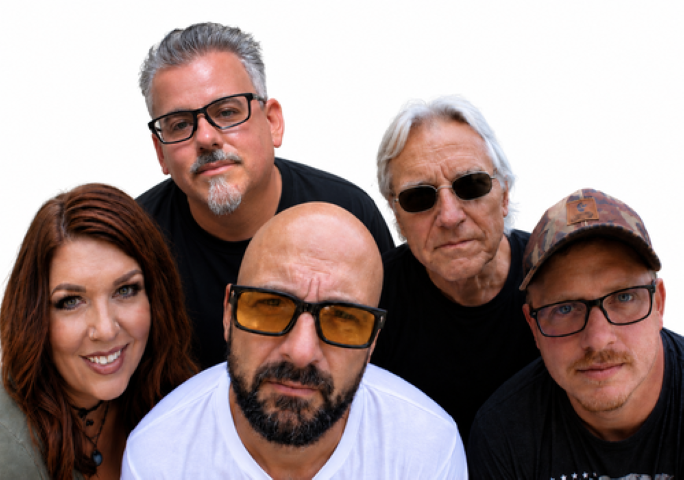
West Virginia alternative rock band Alternative Ed embrace a heavier sound with “Oblivion” as they prepare for their spring 2027 album, Realitivity.
What began as a creative way for alternative education teachers to connect with their students has grown into a full-fledged alternative rock band. Hailing from Kingwood, West Virginia, Alternative Ed have built their musical identity around independence, creativity, and the belief that taking chances can lead to something extraordinary.
Now, Alternative Ed are turning up the intensity with their latest single, “Oblivion,” a darker, heavier release that offers the first glimpse of their upcoming album, Realitivity, expected in spring 2027.
Led by frontman Steve Martin, alongside Gage Pifer (lead guitar), Bryan Raybuck (bass), Jason Payne (drums), and Ashley Sphar (backing vocals), the five-piece embraces grunge-inspired guitars, explosive dynamics, and memorable melodies on the new track.
But “Oblivion” carries more than just a powerful sound. The song explores the importance of overcoming fear, taking responsibility, and recognizing our collective impact on the planet. Its message comes together in one defining line: “It’s your life, be alive.”
Known for their hands-on approach to writing, recording, and producing their music in the West Virginia mountains, Alternative Ed have already surpassed 130,000 streams. Their song “Everything to Me” also reached #1 on Spotify’s Progressive Rock Odyssey playlist.
With a refreshed lineup and a new album on the horizon, the band are entering an exciting chapter.
We caught up with Alternative Ed to discuss “Oblivion,” their evolving sound, the inspiration behind their music, and what’s next for the band.
Alternative Ed Interview: The Story Behind “Oblivion” and Realitivity
Hi, Steve! Good to meet you! Care to introduce yourself to the readers for those not familiar with your music?
First off, thanks so much for having us! I’m Steve Martin, lead singer, rhythm guitarist, and primary songwriter for Alternative Ed. We’re an independent alternative rock band from Kingwood, a small town in Preston County, West Virginia.
Our music is rooted in alternative rock and grunge, but we don’t necessarily try to fit into one particular sound. We write what feels right to us. Some songs are heavy and aggressive, while others are more melodic and emotional. I think that variety is part of what makes us who we are.
We’re a completely independent band. We write, record, and produce our own music, and we’ve been fortunate enough to see it reach listeners well beyond our little corner of West Virginia. We’ve surpassed 130,000 streams, and seeing our music connect with people around the world has been an incredible experience.
We recently released our single “Oblivion,” which represents a heavier direction for us, and we’re currently working on our next album, Realitivity, scheduled for spring 2027. We’re really excited about where things are heading, and I honestly feel like we’re just getting started.
Alternative Ed started with a group of teachers trying to connect with their students through music. At what point did you realize that what began in the classroom could become something much bigger, and what have your students taught you about being musicians?
It’s funny because none of this really started with the intention of forming a band. I’ve spent much of my career working in alternative education, helping students who, for one reason or another, haven’t found success in a traditional classroom setting. Music has always been a huge part of my life, and I started writing songs as a way to connect with those students, share experiences, and hopefully show them that there are different ways to express themselves.
One of the things I’ve always tried to teach my students is that your circumstances don’t have to define your future. I wanted them to see that you can pursue something you’re passionate about, regardless of where you come from or what obstacles you face. Eventually, I realized that if I was going to encourage them to chase their dreams, I probably ought to be willing to chase a few of my own.
The band itself came together through some pretty incredible connections. I was at 123 Pleasant Street in Morgantown watching my son’s band perform when I met some of the people who would eventually become part of Alternative Ed. There were connections to former students and their families, and things just seemed to fall into place. What started as something connected to the classroom gradually became a real band with original music, recordings, and listeners around the world.
I think the moment I realized this could become something bigger was when people who had absolutely no connection to our school, our community, or even our state started listening to our music and responding to it. Suddenly, these songs that began as a way to reach a handful of students were connecting with people we’d never met. That’s a pretty incredible feeling.
As for what my students have taught me, I’d say they’ve taught me as much about perseverance and authenticity as I could ever hope to teach them. Working with young people who face real challenges every day gives you a different perspective on what matters. They’ve reminded me that everyone has a story worth telling, that you shouldn’t be afraid to be yourself, that you can’t be afraid to fail, and that sometimes the most meaningful things come from taking a chance when the odds aren’t necessarily in your favor.
In a lot of ways, Alternative Ed is an extension of everything I’ve tried to teach throughout my career. The difference is that now we’re trying to live those lessons ourselves.
“Oblivion” is about taking chances, overcoming the fear of failure and recognizing our responsibility to the planet. Was there a particular moment or experience that inspired those ideas, and what do you hope listeners take away from the song?
I think “Oblivion” really comes from two different places, but they’re connected by the same underlying idea. We only get so many opportunities in life, and what we choose to do with them matters.
On a personal level, the song is about fear, particularly the fear of failure and the way it can keep us from doing things that might change our lives. I think we all reach moments where we’re standing at a crossroads, and the safest thing to do is nothing. But I’ve always believed that failing at something you’ve genuinely tried to accomplish is far better than spending your life wondering what might have happened. Sometimes you have to be willing to step into the unknown, take that chance, and accept that things might not work out the way you hoped. At least you gave yourself the opportunity to succeed.
But there’s another side to the song that’s much bigger than any one of us. We live in a world where we’re increasingly aware of the damage we’re doing to the planet and to each other, yet we often seem unwilling to make the changes necessary to protect either. Whether it’s the destruction of our environment, the division between people, or the way we sometimes seem to have lost our sense of compassion for one another, there’s a certain irony in knowing where a path might lead and continuing down it anyway. In that sense, “Oblivion” is also a warning about complacency, about recognizing the consequences of our actions before it’s too late.
I don’t think there was one particular moment that inspired the song. It was more a collection of thoughts and observations about the world around us and the choices we make, both individually and collectively. The more I worked on it, the more I realized those two ideas belonged together.
Ultimately, I hope people take away a sense of urgency, but also a sense of possibility. Whether we’re talking about pursuing something meaningful in our own lives or taking responsibility for the world we’re leaving behind, we have more power to change things than we sometimes realize. But none of that happens unless we’re willing to act.
That’s really what “Oblivion” is to me. It’s a call to action. Don’t let fear, indifference, or the comfort of doing nothing determine how your story ends.
You’ve described “Oblivion” as darker, heavier and more aggressive than your previous releases. With a new five-piece lineup and ‘Realitivity’ arriving next spring, what has changed creatively within the band, and how far are you willing to push your sound?
I think the biggest change has been the people we’re making music with and the different experiences and influences everyone brings to the table. We’ve always had a strong alternative rock foundation, but with our current lineup, we’re discovering possibilities that we probably wouldn’t have explored before. There’s a new energy within the band, and I think you can really hear that in the music we’re creating.
Our new bass player, Bryan Raybuck, brings an incredible amount of experience to the band. He’s played in multiple bands across a wide range of genres, and he’s an accomplished multi-instrumentalist. Bryan doesn’t just come in and play a bass line. He approaches the music from a different perspective, and his creativity has introduced a whole new level of dynamics to our sound. He’s helped move us in directions I don’t think we necessarily anticipated, and that’s been really exciting.
Our drummer, Jason Payne, brings another fascinating set of influences. Jason is originally from Washington state and grew up surrounded by the grunge scene, so there’s a natural connection to the kind of music we love. But his musical background goes well beyond that. He was a member of the Washington State University marching band, and his experience across different genres gives him a tremendous amount of versatility. He’s an incredibly talented musician, and he brings both power and musicality to what we’re doing. That combination is exactly what we were looking for.
Ashley Sphar, who provides our backing vocals, has been singing since she was a child and has experience across several different genres herself. She brings another dimension to our music, whether it’s adding beautiful harmonies to something melodic or bringing power and intensity to a heavier song. Her voice gives us opportunities to explore arrangements that simply wouldn’t be possible otherwise.
And then there’s Gage Pifer on lead guitar, whose playing has always been an important part of our identity. Gage is heavily influenced by Stevie Ray Vaughan and the blues, which really sets his musical background apart from the rest of us. He brings a blues-driven style and feel to music that’s otherwise rooted in alternative rock and grunge, and that contrast creates something really interesting. Gage and I have developed a strong musical connection, and when you combine his influences with everyone else’s, you get this incredible blending of styles that helps give Alternative Ed its own distinctive sound.
I think that’s what makes this lineup special. We’re not five people who grew up listening to exactly the same music or learned to play the same way. We all bring something different, and instead of trying to make everyone fit into one particular style, we’re allowing those influences to shape the songs. That blending of backgrounds and experiences is creating something that feels uniquely ours.
As for how far we’re willing to push our sound, I don’t think we’ve established any boundaries. “Oblivion” is definitely a heavier step forward, but I wouldn’t want people to assume that every song on Realitivity is going to sound exactly like it. There will be aggressive, gritty songs, but there will also be moments that are melodic, atmospheric, and emotional. We’re not interested in being heavy just for the sake of being heavy. We want every song to have its own identity and to take listeners somewhere.
More than anything, I think we’re becoming a band that’s less concerned with fitting into a particular category and more interested in discovering what we can create together. With the musicians we have now, the possibilities feel pretty wide open. And I think Realitivity is going to be the first real opportunity for people to hear just how far we’ve come.
You’ve built Alternative Ed independently, recording and producing everything yourselves in the mountains of West Virginia. What has that freedom allowed you to do that you might not have been able to do otherwise, and what would you tell your students about pursuing something creative without waiting for someone else’s permission?
I think one of the greatest things about being independent is that we’ve had the freedom to discover who we are musically without anyone telling us what we’re supposed to sound like. We write what we want to write, experiment with different ideas, and follow the music wherever it takes us. Sometimes that means creating something heavy and aggressive, and other times it means writing something melodic or deeply personal. We don’t have to worry about fitting into a particular category or meeting someone else’s expectations. We’re just creating music that means something to us, and hoping it connects with other people along the way.
But I also want to make something clear. It’s not necessarily that we’ve set out to be fiercely independent. A big part of our independence comes from geography and opportunity. We’re from a small town in West Virginia, and there simply aren’t a lot of opportunities around here for original rock bands to develop, get noticed, or connect with people in the music industry. We’ve had to learn how to do things ourselves because, quite frankly, there hasn’t always been another option.
And while that’s taught us an incredible amount about writing, recording, producing, and promoting our own music, we’re absolutely open to working with the right people. If an opportunity came along to partner with a record label, producer, or production team that understood what we’re trying to accomplish, we’d be excited to explore it. I genuinely believe there’s something special happening with this group of musicians, and with the right resources, experience, and collaboration, I think we could create something pretty extraordinary. We’re not interested in giving up our identity, but we’re certainly interested in growing, learning, and seeing just how far we can take this.
Right now, though, we’re simply having a great time making music together. There’s something incredibly rewarding about getting five people with different musical backgrounds in a room, sharing ideas, and watching a song develop into something none of us could have created individually. That creative process is what keeps us excited. We’re constantly learning from one another, experimenting, and discovering new possibilities. I think that’s what makes this particular time in the band’s history so exciting.
As for what I’d tell my students, it’s really the same message I’ve tried to share throughout my career. Don’t wait for someone else to tell you that you’re capable of doing something. Don’t assume that because you come from a small town, or because your circumstances aren’t ideal, that your dreams are somehow less attainable than someone else’s. And most importantly, don’t be afraid to fail.
I think the fear of failure prevents more people from pursuing their dreams than failure itself ever could. You’re going to make mistakes. You’re going to face rejection. And sometimes, you’re going to feel like the whole world is against you. To be perfectly honest, no one around here believes in us. But rather than letting that discourage us, it drives us. It pushes us to work harder, get better, and prove that we’re capable of more than anyone expects. We don’t see that lack of belief as a reason to quit. We see it as another reason to keep going. And that’s something I want my students to understand. You don’t need everyone else to believe in you. Sometimes, you just have to believe in yourself enough to keep pushing forward.
If there’s one thing I hope my students take away from watching what we’re doing with Alternative Ed, it’s that you don’t have to have everything figured out before you begin. You just have to be willing to start, put in the work, and believe that what you’re creating has value. You never know where something might lead if you’re willing to give it a chance.
And honestly, that’s exactly what we’re doing. We’re five people from different backgrounds who love making music together, seeing where it takes us, and enjoying every minute of the journey. If something bigger comes from it, that would be incredible. But even if it doesn’t, we’re already doing something we love, and there’s a lot to be said for that.
Connect with Alternative Ed:
Website | Facebook | Instagram | TikTok