
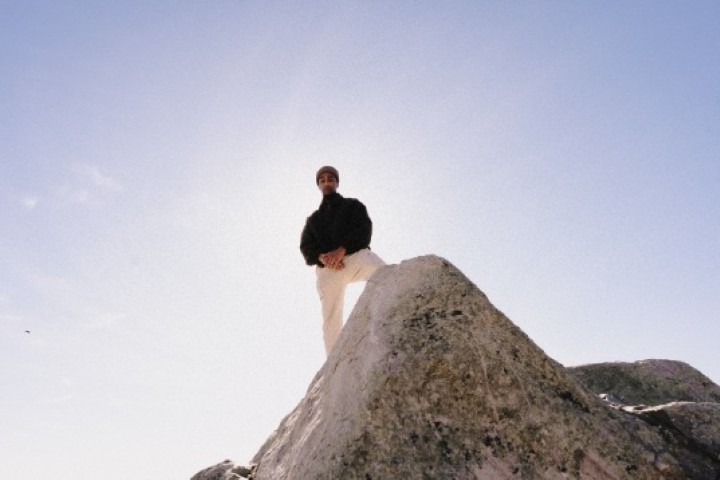
Zaire Ink Releases “Audio/Biography,” the Emotional Centrepiece of Debut Album, When You Meet Yourself
Calgary-raised, Edmonton-based hip-hop artist Zaire Ink releases “Audio/Biography” on June 5, a defining single from his forthcoming debut album, When You Meet Yourself, with the full project arriving November 20. Known for merging dense, precise lyricism with spoken word roots and a deep well of faith, Zaire Ink built the song around a single pivotal night that reshaped the course of his life. The album chronicles a deeply personal journey through mental health challenges, suicidal ideation, and the redemption he found through faith, a story Zaire Ink now speaks on directly as part of his work as a public speaker and youth mentor.
The track opens with his parents’ divorce, the culmination of a difficult season that began years earlier when his family relocated from Montréal to Calgary at the age of sixteen. As the foundations he had built his identity upon started to crumble, Zaire found himself searching for relief in all the wrong places. That search reached a breaking point on the night recounted in the song, when a car accident involving one of his brothers was followed by a heated family argument during which Zaire made a split-second, dangerous decision that left him asking hard questions about what was really driving him underneath the surface.
That night became the hinge point for a much longer journey; one the second half of “Audio/Biography” uses the imagery of a near-death experience to explore the deeper spiritual search that followed. Over the subsequent years, Zaire found himself questioning the beliefs and assumptions that had shaped his life, eventually arriving at a faith that became personal rather than inherited, and a sense that his life carried real purpose. It is this same journey, from crisis through faith to renewal, that now anchors his performances and public speaking engagements, where he shares his story directly with audiences navigating similar struggles.
The lyrics place listeners inside that pivotal night with striking immediacy, opening on the pain of his parents’ divorce before returning to the refrain, “I don’t wanna be the one inside a broken home, why should I keep living when I’m out here on my own?” As the song unfolds, the account of a family argument, a split-second leap from a moving vehicle, and a deeply personal spiritual awakening transforms “Audio/Biography” into more than autobiography. It becomes the emotional and thematic centrepiece of ‘When You Meet Yourself,’ giving voice to the mental health struggles, suicidal ideation, faith, and redemption that now shape both Zaire’s music and the message he shares as a public speaker and youth mentor.
That arc gives ‘When You Meet Yourself’ its structure. The ten-track album develops across three sections, Salvation, Sanctification and Glorification, mirroring the progression from recognizing a need for change to the ongoing, lifelong work of growth and transformation. Each song functions as its own chapter, guiding listeners through self-confrontation toward surrender and, ultimately, hope.
“Audio/Biography” was written by Zaire Sealy alongside Jonathan Johansen and Nolan Sarnicki, produced by Rocket Beats and Producer X, mixed by Afuhmbom and mastered by Get MXD, with Zaire Ink handling the performance.
Before stepping into his solo career, Zaire co-founded the faith driven collective Two World Creatives, releasing two conceptual EPs, Wait and Molded, which laid the groundwork for the voice he brings to this new project. A two-time YYC Music Award recipient, he has been featured on Global News, CBC Radio, CBC Searchlight and in the Calgary Herald, and has performed at notable venues including the Saddledome and the Palace Theatre. Alongside his own music, he leads writing workshops across Western Canada, partnering with schools, faith groups, and community organizations, helping young people use creative expression to find their voice and speak openly about their experiences with mental health.
With “Audio/Biography” now available and ‘When You Meet Yourself’ continuing its rollout toward a November release, Zaire Ink offers listeners and audiences alike an unflinching, yet honest account of what a journey of faith can look like, inviting them to confront life’s deepest questions and discover the hope found in the promises of Christ.
Hi, Zaire! Good to meet you! Care to introduce yourself to the readers for those not familiar with your music?
Thanks so much for having me! My name is Zaire Ink, and I’m a faith-based hip-hop artist. Through my music, I hope to offer an authentic glimpse into what a journey of faith can look like and point people toward the same hope I’ve found in Christ.
I’ve come to believe that some of the most meaningful growth happens when we’re willing to ask ourselves the questions we’ve been avoiding. That’s the driving force behind everything I create, and it’s the invitation I extend to listeners whenever they press play.
“Audio/Biography” revisits one of the darkest nights of your life. Was there ever a point where you thought, “I’m not ready to share this publicly,” and what changed your mind?
For sure! This night actually occurred around eight or nine years ago, but it wasn’t until I wrote this song that I truly came to terms with the experience and found the closure I needed. For the longest time, there was so much guilt and shame associated with that night that I avoided talking about it altogether, even though it’s a significant part of my story. I genuinely believed people would look at me differently, perhaps see me as emotionally unstable or weak, which made me feel like it was something I should keep to myself.
So, what changed? Over the years, in moments when it felt safe to do so, I began sharing the details of that night in private conversations. As I reflected on those experiences, I realized people were incredibly kind and compassionate. More often than not, they responded by sharing their own struggles with mental health. While I believe not everyone has a right to know our story, and that we should be mindful not to trauma dump, I’ve found that vulnerability creates space for others to speak honestly when they’re struggling and in need of support.
Now, nearly a decade removed from that night, my life has been completely transformed. I have a wonderful wife, a beautiful son, the opportunity to work with youth in a meaningful way, and the privilege of creating art that is authentic and true to who I am.
Writing Audio/Biography as part of the larger body of work When You Meet Yourself was my way of taking complete ownership of my story. My hope is that by sharing it, others will feel empowered to embrace their own testimony and be reminded that healing is possible on the other side of hurt and hopelessness.
I’m no longer ashamed of the darker chapters of my story because they’re part of how God shaped me into the person I am today.
You write about mental health, suicidal thoughts and faith with remarkable honesty. How do you make sure you’re opening a door for listeners instead of asking them to carry your pain?
Great question! I believe that as an artist I have a responsibility to steward the ears of those invested in my message, so I always strive to provide my audience with the sense that even when I’m speaking on painful subject matters, such as mental health or suicidal thoughts, there will ultimately be some sort of resolution.
I think there can be a tendency to either fixate on the struggle or glorify the breakthrough, neglecting the often uncomfortable and confusing process in between, which is where the deepest growth can take place. This is the focus of my album When You Meet Yourself. My story is only meant to serve as an invitation for listeners to reflect on their own, to wrestle with difficult questions, revisit the road that brought them here and consider where hope can be found.
This is why my song Audio/Biography doesn’t conclude with the climax of me jumping out of a car. Leaving the story unresolved would have left people to sit in my pain, instead of inviting them to see the hope that emerged from it. I wanted listeners to not only see the depths of my despair, but also where that road eventually led.
I came to the realization that no one person can or should carry the burden of my pain. So if someone hears my music and feels sorry for me then I’ve missed the point as an artist. My goal has always been to create space for others to be honest about their own story and recognize that Christ is the only One who can truly bear the weight of what we’re carrying.
As a youth mentor, you’ve heard countless stories from young people. Have they changed the way you think about your own journey or even the songs you write today?
Definitely! Hearing the young people I’ve had the privilege of working with share their stories has helped me better understand why God allowed my journey to unfold the way it did. My experiences have cultivated in me a deep desire to serve and support youth, especially those that find themselves in difficult situations. As a result of what I’ve been through, I’m better equipped to empathize, build trust, and connect with young people in a way that allows me to speak into their lives from a place of shared experience.
A particular example that sticks out to me was early on in my career when I was facilitating a creative writing workshop for youth. There was one individual that had been disruptive: telling jokes and distracting other students, throughout the session. At some point I was able to share my work with them before giving them the opportunity to write their own piece. To my surprise this young man shared a powerful poem about his difficult home life that from the outside looking in you would’ve never guessed, based on his behavior and demeanor.
That experience has remained with me ever since, because it reminded me that a cry for help looks different for everyone, but our vulnerability is often the key that gives someone else the permission to do the same. So, whether I’m writing a song about faith, love, heartbreak or doubt, I never want to present a polished version of myself. I want people, young people especially, to know that there’s value in acknowledging difficult emotions, asking honest questions and bringing issues to light. Healing doesn’t come from pretending everything’s alright, rather it starts when we’re honest about where we are and our need for help.
When someone listens to When You Meet Yourself, what’s the one thing you hope they hear from you?
When someone listens to When You Meet Yourself, I hope they hear the story of Christ patiently knocking on the door of my heart and consider that He may be doing the same in their own lives.
Much of this project explores the vices and habits that had over time become routine for me as heartbreak and loss left me disillusioned. It reached the point where I couldn’t picture a way out or fathom a way forward. But then there was that knock. Constant. Persistent. Patient. Reminding me that someone else was still there drawing me out of darkness into the light.
As I reflect on my life, I see now that God had been pursuing me long before I even recognized it. So if this album does anything, I pray it encourages someone to pause long enough to ask the questions they’ve been avoiding and consider whether Christ has been patiently knocking on the door of their own heart all along. I don’t believe change is linear or that transformation happens overnight, but I’ve learned that even the smallest moments of surrender can change the course of a life.